Teaching unions secure fully funded teacher pay offer after long battle with Government
Schools in England are to get around £500million in extra funding towards the teachers’ pay award this year

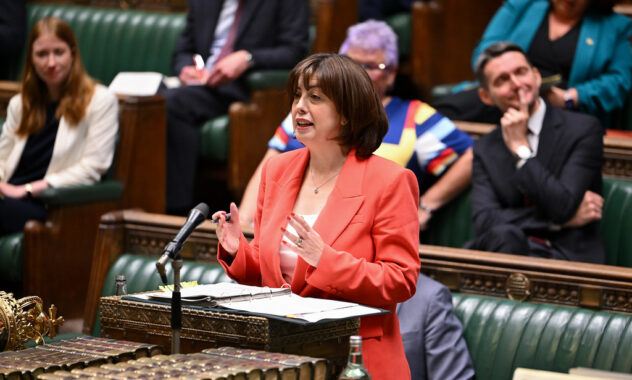
After lengthy union negotiations with the Secretary of State for Education, teachers have secured a fully funded pay increase throughout England. In a letter to the General Secretary of the NEU, Daniel Kebede, Education Secretary Lucy Powell outlined her proposals for funding alongside a willingness to address issues around accountability, workload, and well-being.
Daniel Kebede, general secretary of the National Education Union, said:
Finally, we have a government that accepts the reality that any teacher pay award must be fully funded. Plugging the £460 million black hole in school budgets signals a welcome return to reality, and a message of hope for the entire school community.
Be in no doubt that the significant ground conceded by government is a consequence of NEU members’ willingness to take a stand. It not only includes those who voted in our indicative ballot, but everyone who has campaigned against School Cuts and fought the effects of austerity in our classrooms.
Schools have been running on empty for far too long. Leaders simply could not afford to fund the pay award as set out by the previous education secretary. The new administration has accepted that it is wrong to force schools to make cuts to education just to make ends meet.
There is still much to do. Seventy-four per cent of schools have less money in real terms than they did in 2010, badly impacting upon the educational experience children receive. Likewise, experienced teachers have seen their pay cut by 23 per cent in real terms since 2010, contributing to the ongoing recruitment and retention crisis. Government must now enter into discussions on a long-term solution to school funding and pay.
We hope to work with this government to ensure that education is truly valued in this country. We hope today marks an important turning point, and one we as a union will aim to build from. We must make austerity in the classroom a thing of the past.
In light of this news the NEU Executive will discuss our response on the 24 September.
Responding to the reports, Matt Wrack, General Secretary of NASUWT – The Teachers’ Union, said:
Finally the government has seen sense and started to address the issue we have been raising for months around the funding of the teachers’ pay award.
We warned that expecting schools to dip into their budgets to part-fund the pay award would only lead to further cuts to staffing, resources and provision for pupils, with children’s education ultimately paying the price.
NASUWT has argued that savings made in the employers’ contributions to pensions should be used to improve the funding situation in schools. It is welcome that this approach has finally been adopted, at least in part, and provides £500 million to schools for 2026/27.
Schools still need a sustainable, long-term injection of extra funding if they are to be able to meet the challenges posed by the growing complexity of needs among our children and young people.
This must just be the start of a move to bring education funding up to a level to meet the increasingly complex needs in the classroom and the emerging demands of 21st century education.
Paul Whiteman, general secretary at school leaders’ union NAHT, said:
The government’s decision not to claw back these pension savings from school budgets is certainly welcome.
We wrote to the previous chancellor about this in May of this year and we are pleased that the new administration has heard and understood our demands.
We will need to look carefully at the detail to determine whether this means the pay uplift is genuinely fully funded at an individual school level, but it certainly puts schools in a better position than they would otherwise have been.
The deal wasn’t universally welcomed, however. The GMB, which represents more than 100,000 support staff in schools, said Ministers were effectively using savings generated by a reduction in pension contributions to cover part of the cost of the teachers’ pay award.
Stacey Booth, GMB national officer, described the approach as “disgusting” and argued that some of the lowest-paid workers in education were being made to subsidise higher-paid colleagues:
School support staff are already paid a pittance for nurturing, feeding and helping to educate our children. To take money from their pensions to give others a pay rise is completely disgusting.
Ministers should be ashamed of themselves – if they can’t fund a pay rise they should have the guts to admit it rather than stealing the money of others.
The NEU dispute this version of events, with General Secretary Daniel Kebede adding:
Not one support staff pension has been cut – this is a fall in what employers pay in, set independently by actuaries because these funds are healthier than expected. Our fight from day one was for a fully funded pay rise for the whole school workforce, and this is a win on exactly those terms: support staff were most of the 8,300 jobs we warned were at risk from an unfunded award, and it’s the NEU’s campaign and the threat of strike action which has now ensured this money stays in the school system.


Related news
Teaching unions criticise the limited scope of the new SRTB remit.

Equity survey shows precarity of creative workforce