“Unfair” youth minimum wage must go, says TUC
New TUC analysis shows the urgent need to abolish youth minimum wage.
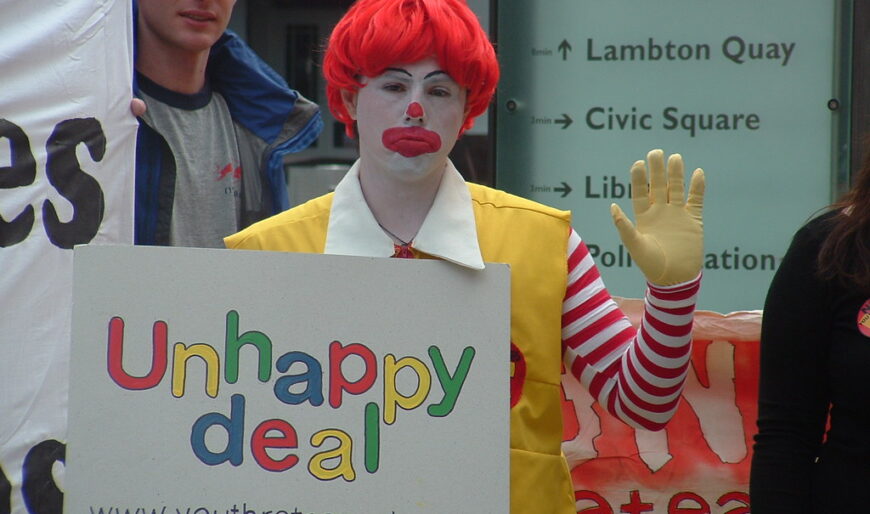
Ahead of the Spring Statement tomorrow, new analysis by the TUC today (Monday) shows that a million 18-20 year olds – 85 per cent – are already paid above the youth minimum wage, rendering it not only unfair, but also “obsolete” as only 1 in 7 receives it.
700,000 young people – 63 per cent of those in work – are paid at or above the adult national minimum wage so not covered by the youth rate at all.
Given the majority of employers already pay young people a fair wage, “doomsday” warnings about the impact of equalising rates are “scaremongering and misleading” – says the TUC.
At the moment, adults 21 and over must be paid £12.21 per hour while those aged between 18 and 20 must be paid £10 per hour.
This speaks to a fundamental issue of fairness. Young people “pay the same bills as everyone else, and deserve a fair wage for their work” – the TUC says today.
Unions find that many businesses report they don’t want to deal with this unfairness, nor the administrative burdens of changing workers’ pay as they get older.
Labour’s manifesto promised to remove discriminatory age bands. Since taking office, they have made important strides.
“Closing the gap”
Successive governments have closed the gap between the adult rate and youth rate with no negative impact on employment.
Although Reform and the Conservatives have called for youth rates to stay in place, equalising youth minimum wage rates was started under the last government. First as 23–24-year-olds became entitled to the adult rate in 2021, and then as 21–22-year-olds joined them in 2024. Further increases since the election have been following this trend.
Despite scaremongering at the time, LPC found previous equalisations were carried out “without an increase in unemployment and underpayment”.
The Low Pay Commission (LPC) is the independent body responsible for balancing youth employment with the equalising the minimum wage and has done so successfully for 26 years. The TUC argues it should be trusted to continue its evidence-based approach to finishing the job.
“Unfair”
The inherent unfairness of the youth rate was compounded over recent years as the youth rate fell significantly behind the adult rate. Between 2010 and 2024, the 18-20 rate fell from 83% to just 75% of the full minimum wage.
There is now a small gap remaining – the 18-20 rate from April 2026 is set to be 85% of the adult rate.
The UK is behind similar countries in still having a youth rate – countries such as France, Germany and New Zealand do not have lower rates for adults aged 18 and above.
Especially given that even when the youth rate is abolished, workers under 21 will still be cheaper to hire, as employer NICs only applies to workers aged 21 or over.
“Real solutions”
While the Government is right to be sensitive to young people’s unemployment levels, we need real solutions not scaremongering about the minimum wage.
The TUC has consistently argued sluggish consumer demand is keeping the UK economy in the slow lane.
Industries which have a greater proportion of minimum wage jobs, like hospitality and retail, need customers with money in their pockets.
It is also important to recognise that recent rises in youth unemployment have been offset by falls in youth economic inactivity rates.
To tackle rising youth unemployment the Government should bring forward stronger employment rights, an ambitious jobs guarantee and quality apprenticeships.
TUC General Secretary Paul Nowak said:
Young people pay the same bills as everyone else and deserve a fair wage for their work.
Youth rates are not only unfair, but they’re also increasingly obsolete as most businesses hardly use them.
Youth unemployment is a serious issue that deserves real solutions, like stronger employment rights, an ambitious jobs guarantee and quality apprenticeships – not doomsday scaremongering and misleading claims about the minimum wage.
The Low Pay Commission are the trusted experts and should be trusted to finish the job, setting out a plan to abolish the minimum wage youth rates this Parliament.
The government promised to deliver change. Rowing back in face of unsubstantiated business lobbying – at real cost to young people’s living standards – would be exactly the wrong approach.


Related news

Nearly 660 employers announced as failing to pay the minimum wage

Butlin’s Resort Safety Officers to strike over August Bank Holiday weekend