Parliamentary ‘ping pong’ between the House of Lords and the House of Commons continues over the Employment Rights Bill
Tory and Lib Dem Peers continue their attacks on day-one rights and trade union freedom
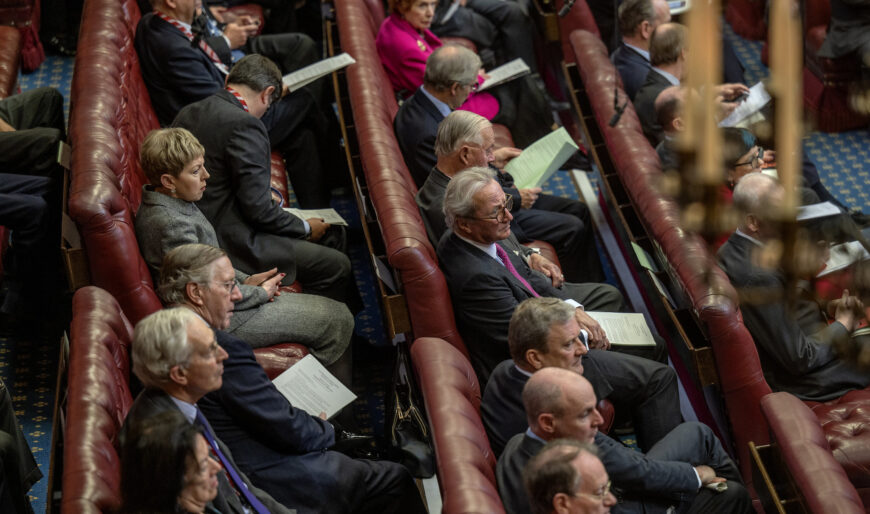
MPs and Peers continued Parliamentary ping-poing over the Employment Rights Bill this week, as its final stages appear further protracted.
When the Bill returned to the House of Commons at the beginning of the month (5th November), MPs rejected all of the Lords’ amendments (barring those relating to young people working on heritage railways). According to Parliamentary procedure, the Bill was sent back to the Lords for further consideration of the Commons’ reasons.
In a very similar session to the first round of ‘ping-pong’ the Lords debated key issues relating unfair dismissal, zero-hours contracts, trade union political funds and industrial action balloting thresholds.
In summary, the following issues were sent back to the House of Commons without agreement:
Day one unfair dismissal rights:
At debate, the Lords continued to insist on a six-month eligibility period for claiming unfair dismissal, rather than day one rights.
The consensus amongst the Bill’s loudest critics is that a new 6 month qualifying period would be a more reasonable reduction from two-years. The Commons have resisted this argument on the grounds that “it’s appropriate for protection from unfair dismissal to apply from the beginning of a person’s employment.”
The Bill in its original form contains a key provision dealing with the power of the employer to dismiss without cause for the first two years of employment. The proposal to remove the two-year qualifying period was very welcome, but has recently been subjected to significant attacks from Tory and Lib Dem peers. It’s important to note that, as the IER briefed upon the publication of the Bill, the ‘statutory probationary period’ exception was in itself a watering down of the intention to fully introduce protection from unfair dismissal as a day-one right to workers.
During the debate, Tory peers denied that this provision would have any benefit for workers, but rather runs the risk of creating a more cautious hiring environment which could drive up unemployment. The provision was defended by Lord Collins on behalf of the government, who said that they have “listened to stakeholders and tabled an amendment in lieu in the other place which ensures that the Government consult on key aspects of the framework.”
He added:
As we have said from the start, the implementation of day-one unfair dismissal rights will be done with a light touch. There is a power in the Bill to modify the test when employers can fairly dismiss employees during the statutory probationary period for specific reasons related to performance and suitability. The Government will consult on our approach to ensure it has maximum flexibility so that the new framework works effectively for employers and employees in terms of the cost of its implementation and operation.
Guaranteed hours
The Lords continue to advocate for a scheme whereby workers can choose to opt-out of receiving guaranteed hours offers. Additionally, they pushed for a provision which would require the Secretary of State, when making regulations in relation to guaranteed hours, to have regard for the ‘specific characteristics and requirements of seasonal work’.
Tory and Lib Dem Peers have made a number of attacks on the Bill’s measures relating to zero-hours contracts extending back to its initial entry to the House of Lords. When these amendments were initially introduced in July, IER Director James Harrison pointed out:
The rationale for the Tory/Lib-Dem amendment on ZHC’s is flawed. There was already an existing power in the Bill for the minority of workers who don’t want regular hours to refuse them. This amendment wipes out any power the provision had – as a right to request regular hours amounts to nothing when confronted with employer coercion. We need to force employers to act fairly, not have Oliver Twist clauses like this forcing workers in to the indignity of having to beg for regular hours.
Trade Unions and Industrial Action:
The Lords continue to disagree with the proposal that union members be automatically opted-in to a union’s political fund. They also continue to contest the removal of the requirement that there is a turnout of at least 50% for ballots on industrial action.
The Bill will now return to the Commons once again, where MPs will consider the Lords’ message and vote to either reject or suggest amendments.


Related news
Unions respond to Burnham’s first conference speech as Labour leader & PM
TUC unions unanimously back the call for a Second Employment Rights Bill