
Andy McDonald

Andy McDonald is the former Shadow Secretary of State for Employment Rights and Protections. He is the Labour Party Member... Read more »

A second phase of employment legislation that builds upon the achievements of the ERA is an obvious option.
 9 Jul 2026|
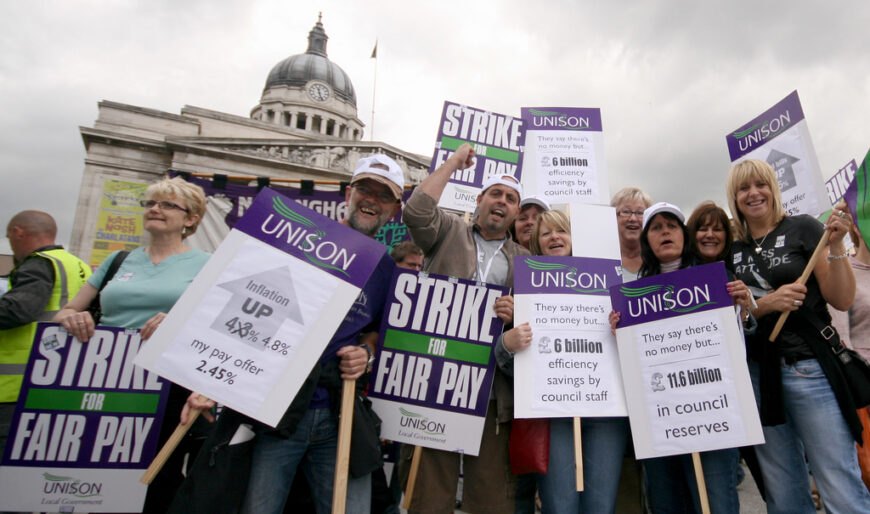
The agreement reached between the British Medical Association and the Government over doctors’ pay provides an illustration of what effective industrial relations can achieve. The BMA described the settlement as being “sufficient to continue on the road to pay restoration” following sustained industrial action.
The outcome demonstrates that employment legislation is only one part of improving working lives. Equally important is creating the conditions in which trade unions are able to negotiate improvements for their members.
That distinction is significant when considering the Employment Rights Act. The Act represents the most substantial expansion of individual and collective employment rights for a generation, delivering reforms that trade unions and the Labour Party campaigned for over many years.
It provides an important legislative foundation but should be understood as the beginning of a wider programme rather than its conclusion.
The Employment Rights Act does not fully reflect the ambition of Labour’s original New Deal for Working People. As the programme developed, aspects became more cautious, with proposals narrowed following consultation and employer engagement.
Since Royal Assent, debate has increasingly centred on implementation through regulations and statutory codes of practice, raising legitimate questions about whether some reforms may ultimately prove less robust than Parliament originally intended.
None of this diminishes the significance of the legislation. Major Labour reforms have often been delivered in stages, with successive governments building on earlier foundations as practical experience identifies both successes and limitations.
The New Deal for Working People emerged in 2021 after more than a decade of stagnant wages, insecure employment and declining collective bargaining coverage, and the subsequent P&O Ferries scandal made the case for action even stronger. Its central proposition was not simply that employment law required updating, but that Britain’s labour market had become characterised by an imbalance of power.
Low pay was understood not only as a problem of insufficient statutory protection but also as the consequence of weakened collective bargaining. The objective was therefore to strengthen the institutions through which workers negotiate pay and conditions, recognising that stronger bargaining power supports higher wages, greater job security and improved productivity.
That analysis informed a programme that envisaged restoring sectoral collective bargaining, modernising industrial action law through measures including electronic balloting, ending fire and rehire and exploitative zero-hours contracts, strengthening trade union organising and workplace access, and placing collective bargaining at the centre of Britain’s economic model.
Much of that ambition remained within the subsequent Make Work Pay programme and many important elements found their way into the Employment Rights Act. Yet some of the original objectives remain only partially realised.
This is not simply a question of employment law. It goes to the heart of Labour’s wider economic strategy.
Successive governments have relied principally on tax policy, the benefits system and increases to the National Minimum Wage to improve living standards. Those interventions remain essential, but they largely operate after market outcomes have already been determined.
Strengthening workers’ bargaining power addresses the distribution of income before state intervention becomes necessary. International evidence consistently associates higher levels of collective bargaining coverage with stronger wage growth, improved pension provision, better sick pay, lower levels of insecure employment and, in many cases, higher productivity. Trade unions are therefore not merely participants in economic policy; they are institutions through which economic outcomes are shaped.
If Labour’s long-term objective is to secure rising living standards through sustained wage growth rather than continuing reliance on redistribution alone, collective bargaining necessarily becomes part of economic policy rather than simply employment policy.
Throughout the Bill’s passage, the Trades Union Congress and affiliated unions consistently welcomed the direction of reform while arguing that several provisions could be strengthened.
On fire and rehire, they advocated a genuine prohibition except in exceptional circumstances. On zero-hours contracts, they sought stronger guaranteed-hours protections and more effective safeguards against insecure work. Fair Pay Agreements were presented as the first stage of wider sectoral collective bargaining rather than an endpoint. Similarly, reforms to trade union access and industrial action balloting were viewed as opportunities to simplify workplace organising rather than replace one set of procedural barriers with another.
Those arguments were reflected in amendments tabled during the Bill’s passage through both Houses of Parliament.
Implementation has further illustrated the limits of relying extensively on secondary legislation. More than twenty consultations and calls for evidence have accompanied the wider Make Work Pay programme and implementation of the Employment Rights Act.
Consultation is necessary and desirable. However, where Parliament leaves substantial policy detail to regulations and statutory codes, implementation becomes another arena in which rights are contested. Recent consultations have repeatedly required trade unions to defend reforms already agreed in principle by Parliament. That experience strengthens the case for placing fundamental employment rights in primary legislation wherever possible.
As implementation progresses, attention will inevitably turn to the next stage of reform. The next Labour Prime Minister will have the opportunity to assess how the programme initiated through the New Deal for Working People might be developed in light of experience.
One option would be a second phase of employment legislation that builds upon, rather than revisits, the achievements of the Employment Rights Act.
Such a programme could consider extending sectoral collective bargaining beyond adult social care into additional sectors of the economy; consulting on replacing the public sector pay review body system with sectoral collective bargaining arrangements; establishing a single legal status of worker; introducing a comprehensive prohibition on fire and rehire enforceable by injunction; strengthening protections against insecure work; simplifying trade union organising and workplace access; expanding insourcing so that public procurement supports secure employment and collective bargaining; properly resourcing employment tribunals and labour market enforcement; and ensuring tribunal awards are consistently enforced.
These are not proposals that seek to diminish the achievements of the Employment Rights Act or constrain the discretion of a future government. Rather, they identify areas where implementation and practical experience may point towards further legislative development and reflect the original trajectory of the New Deal for Working People.
Britain’s labour market is unlikely to become more secure, productive and prosperous through statutory minimum standards alone. Lasting improvements in living standards depend equally upon rebuilding the institutions that enable workers to negotiate collectively and share more fairly in economic growth.
The Employment Rights Act represents a significant step towards that objective. The question for the next phase of Labour’s programme is how those foundations can be developed into a more comprehensive settlement that restores collective bargaining as a central feature of Britain’s economy.
Andy McDonald is the former Shadow Secretary of State for Employment Rights and Protections. He is the Labour Party Member... Read more »










Trade union law has to reflect the reality of our complex working lives