
Kate Ewing

Kate Ewing is a researcher at Just Fair. She has a LLM in European and Global Law from Pompeu Fabra... Read more »

'Poverty anywhere constitutes a danger to prosperity everywhere’: why Spain’s unions and tenants are joining a general strike over housing and wages
 7 Nov 2026|
A decent job. A safe and warm home. Food on the table. Time with family and friends. The opportunity to enjoy the best possible health. This shouldn’t seem a lot to expect in 2026 in some of the wealthiest global economies. However, for too many people the essential elements needed to live well are increasingly out of reach in a system which is not working for ordinary people and their families. Low pay and insecure work arrangements leave many people unable to afford housing, food and childcare costs. Trade unions have an important role in resisting this and defending the rights of their members and families to live a life of dignity.
Housing problems in Spain
These concerns are not limited to the UK, as highlighted by recent developments in Spain relating to housing. Despite a constitutional right to housing, the limited availability of social housing and rising rents in many Spanish cities has reached crisis point. El País newspaper recently reported that the cost of buying a home in Spain rose by 80 per cent between 2015 and 2023, while the cost of renting has increased by 87 per cent in the same period. This has coincided with wage growth of around 30 per cent and income growth of 50 per cent, leaving a clear affordability gap. It is further noted that a doubling of ‘overnight stays in tourist apartments’ and increased non-resident foreign investment in property has put a strain on housing availability. A lack of housing stock and an affordability gap combine to create challenging conditions for workers and their families.
A recent report by Oxfam Intermón analysed the link between in-work poverty and housing in Spain noting that work is not sufficient to ensure that workers can make ends meet. The study found 15.49 per cent of workers are in poverty after paying housing costs. This figure rises to 34.08 per cent for those in rented accommodation who pay market-rate rents. Some groups are hit particularly hard – for example, the in-work poverty rate for non-EU migrants is three times higher than that of Spanish nationals. The study notes that non-EU nationals ‘are, for the most part, employed in the most precarious sectors’ and poverty is concentrated ‘where bargaining power is low.’
The human face of the Spanish housing crisis was brought into sharp relief with the treatment of 87-year-old María del Carmen Abascal – ‘Maricarmen’ – from the home in Madrid in which she had lived for 71 years. The building had been bought by a company and the rent raised from €500 to €2,650 a month. A subsequently lowered revised rent of €1,650 remained an impossible price on a monthly pension of €1,350. She was evicted from her home. The raw brutality of what that means was underlined by images which appeared in the media of Maricarmen sitting in her wheelchair inside her home, and being spoken to by the National Police officers executing the eviction while they were wearing riot gear with helmets and visors. She was eventually carried from her home on stretcher to a waiting ambulance for admission to hospital with severe exhaustion. The apparent cruelty was compounded by the news a week later that Maricarmen had died.
Protests followed across Spain, with encampments established in main plazas in Madrid and Barcelona. The national government sought to introduce emergency housing protections which were voted down by the opposition. A snap election has been called. The battle lines are drawn – the side of the ordinary people or the side of rampant property speculation. It is, according to Prime Minister Pedro Sánchez, a moment for all Spanish people to decide whether they want Spain to ‘continue to move forwards’ for social justice or hand over power to those who ‘benefit the same old crowd, a privileged minority.’
Everybody out… to make sure nobody else is thrown out
The two largest unions in Spain, the Confederación Sindical de Comisiones Obreras (CCOO) and the Unión General de Trabajadoras y Trabajadores (UGT), then announced that they had reached agreement that they would call a 24-hour general strike to seek ‘wages that are sufficient to afford decent housing.’ Employer associations such as the Confederación Española de Organizaciones Empresariales (CEOE) questioned the legality of the proposed strike – expressing ‘concerns’ it was political in nature and not labour-related. This view was rejected by CCOO and UGT who clarified that the strike was being called to ‘unblock collective bargaining to raise salaries, reduce working time, improve workers’ health and eradicate precarity.’
This link between wages and collective bargaining with the right to housing and the purchasing power of workers was further elaborated at talks held at the mediation and arbitration service – Servicio Interconfederal de Mediación y Arbitraje – between the unions and the employers’ associations to explore the possibility of avoiding the strike. This is a required step prior to formal registration of a strike with the Ministry of Labour. The talks were unsuccessful and the strike formally registered. The CEOE subsequently announced that they would not pursue a legal challenge in advance of the strike, although they have reserved their position in relation to after the strike.
The date of the General Strike has been set for 11 November with a number of other Spanish trade unions confirming that they will join the action along with tenants’ unions and other civil society groups and actors. According to the CCOO and UGT general strike webpage, the strike is ‘an outcry against the job and housing insecurity that weighs down millions of people’ and that its purpose is ‘to increase salaries, to reduce working time, improve the health of working people and to eradicate insecurity.’ It will be ‘a protest for wages, for housing, and for prices that allow us to live with dignity. Because the wealth we generate must also reach those who make it possible’ (CCOO).
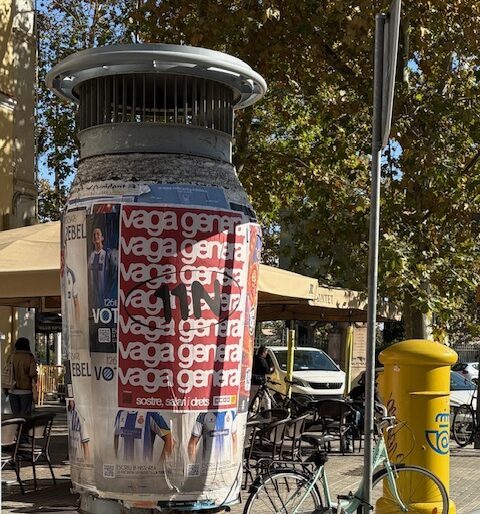
This will be a nationwide shut down organised at work and at home – with the joining together of trade unions and tenants’ unions, united in a collective endeavour, with rights at work, the right to housing and the cost of living inextricably linked. Unions are well placed to make these connections and defend the rights of workers in and beyond the workplace. Working alongside other civil society groups – such as tenants’ unions – on common issues only strengthens that power. According to a strike website published by the Sindicato de Inquilinas (Tenants’ Union): ‘On 11N [11 November] we shut the country down’ to demand ‘a change to the rules of the game’, to ‘end a housing system based on speculation and build a system based on rights.’
The demand for a system based on rights recognises that decent working conditions and fair wages, being able to afford housing without being plunged into poverty, to have enough food to eat and the opportunity to enjoy the best possible health are not wishes or desires but rights to which we are all entitled so we can live well. They are all rights which are protected under international human rights law and which countries like Spain and the UK have pledged to uphold.
Expanding the strike?
The call for a general strike in Spain is a reminder to those who need it that workers are not machines whose lives begin and end in the workplace. As the Declaration of Philadelphia, the foundation document of the International Labour Organisation (ILO), recalls, labour is not a commodity and ‘poverty anywhere constitutes a danger to prosperity everywhere.’ The ‘war on want requires to be carried with unrelenting vigour within each nation, and by continuous and concerted international effort.’
Reports are emerging that discussions are underway which may see the Spanish General Strike of 11 November become an Iberian Peninsula-wide general strike with unions in Portugal considering coordinating action with their Spanish counterparts. There is thus potential to raise the stakes further. The systemic problems faced by workers struggling to get to the end of the month go beyond national borders given the role of transnational corporations and wealth funds in the undermining of workers’ rights along with their role in the property speculation that inhibits ordinary people’s ability to afford decent housing.
Fighting back and international coordination is just what the ILO founding principles call for. The Spanish unions are showing that there comes a point when as a society we say enough is enough – that workers’ rights in and beyond the workplace can and must be defended.
Unions in the UK can and should be inspired by our Spanish siblings.
Readers are invited to follow this link to read more about Protecting workers and strengthening trade unions: the role of economic, social and cultural rights in and beyond the workplace, a joint project from Just Fair and the Institute of Employment Rights, supported by funding from Alex Ferry Foundation.
This piece was written on 26 October 2026, before the rail disaster near Urda in Spain on 28 October 2026 in which 69 people are confirmed to have died. This event may have an impact both on the General Strike called for 11 November and the General Election to be held on 29 November.
Kate Ewing is a researcher at Just Fair. She has a LLM in European and Global Law from Pompeu Fabra... Read more »









Solidarity by Design