

Government launches consulations on detriments for taking industrial action & collective redundancy
Govt seeking views on detriments on workers for taking industrial action & collective redundancy thresholds

The Labour government has launched two further consultations on (1) collective redundancy obligations and (2) detriments connected with taking industrial action.
Collective redundancy thresholds
As Employment Law Barrister Daniel Barnett explains, redundancy obligations currently arise under the Trade Union and Labour Relations (Consolidation) Act 1992 (TULRCA) where an employer proposes 20 or more redundancies within a 90-day period at one establishment. Different sites, stores and warehouses are usually treated as separate ‘establishments’. This means that large-scale redundancies spread across multiple sites may not trigger collective consultation obligations.
“The Employment Rights Act 2025 seeks to address this gap. Section 29 amends TULRCA to introduce an additional alternative threshold based on the total number of redundancies across the whole business. This new threshold could trigger collective consultation obligations even where fewer than 20 redundancies are proposed at any single establishment.”
The Government website introduced the consultation thus:
“Collective redundancy obligations are an important part of ensuring a fair and transparent process when employers need to make redundancies.
Currently, employers are only required to undertake collective redundancy obligations when making 20 or more redundancies at one establishment. This has led to situations where large numbers of employees at an organisation are not being consulted because the redundancies are spread across multiple sites below the current threshold.
The Employment Rights Act 2025 will introduce new protections so that employers will be required to undertake collective redundancy consultation and notification whenever they make a threshold number of redundancies across their entire organisation.
The government is seeking views on the level and methods by which the new organisation-wide threshold for triggering collective redundancy obligations might be set.
The government is considering 2 options to set the new organisation-wide threshold:
- using a single fixed number in the range of 250 to 1,000
- tiering this new obligation based on number of employees
These proposals will need approval from Parliament before taking effect.
The government is seeking responses from all interested parties.”
You can respond to the government’s consultation on collective redundancy obligations here. The consultation is open until 21st May 2026.
Industrial action detriments
Also last week, the government launched a consultation seeking views on whether it should outlaw all detriments connected with taking industrial action, or instead specify a list of prohibited detriments.
The government also proposes adding section 76 ERA 2025 claims to the list of claims where an employment tribunal may award an uplift of up to 25% in compensation if the employer fails to follow the ACAS Code of Practice on Disciplinary and Grievance Procedures (where it applies). This would bring the new detriment claim in line with claims under s146 TULRCA.
The consulation documentation states:
“This government was elected on a pledge to rebuild our economy so that it delivers for working people.
That’s why we have passed the Employment Rights Act 2025 in line with the government’s plan to Make Work Pay to build a Britain for all, on the firm foundations of security, respect and opportunity.
The Act fosters a new partnership of cooperation between trade unions, employers and the government. This partnership will work successfully when employers are respected by trade unions and when trade unions are given space and support to effectively represent workers’ collective voice.
Industrial action is one way in which workers are able to express their collective voice. While it should always be treated as a last resort, if and when workers do choose to take industrial action, it is important that they are treated fairly and respectfully. Properly managed industrial action supports effective industrial relations and creates the most effective pathway to a resolution that works for everyone.
The Employment Rights Act is enhancing protections for workers taking industrial action by prohibiting detriments that employers might enact to penalise, prevent or deter them from taking industrial action. This supports the government’s aim of ensuring that industrial relations are conducted with integrity, fairness and mutual respect. We now seek your views on the scope of the prohibition to ensure a fair balance for unions, workers and employers.”
You can respond to the government’s industrial action detriments consultation here. The consultation is open until 23rd April 2026.


Related news

Bakers union vows to fight for Greggs jobs
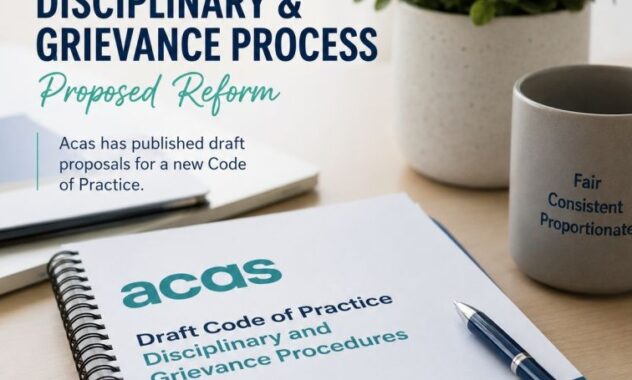
Acas Code of Practice on Disciplinary and Grievance Procedures

New duty to inform workers of their right to join a trade union delayed until Jan 2027
Related news
Bakers union vows to fight for Greggs jobs
Acas Code of Practice on Disciplinary and Grievance Procedures




