International Court of Justice: workers have the right to strike under main labour law treaty
The opinion could lead to changes in labour laws worldwide in countries that have so far not recognized employees' right to strike.
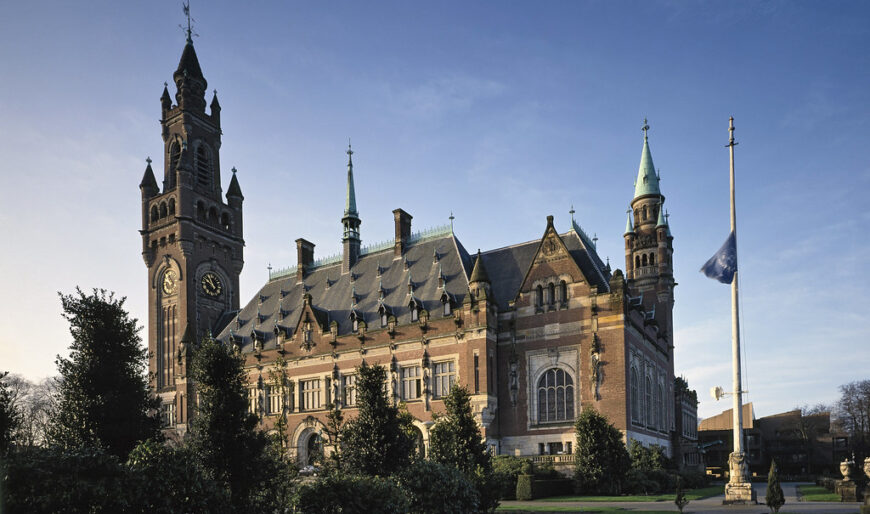
This week the ICJ delivered a long-awaited advisory opinion confirming that in its opinion, the right to strike is covered by ILO Convention 87 on Freedom of Association and Protection of the Right to Organise.
A number of UK-based experts made submissions to the ICJ in advance of it’s deliberation. IER experts Prof Keith Ewing, Lord John Hendy KC and Prof Tonia Novitz all contributed significantly over an extended period. Here is the full statement by Prof Tonia Novitz on the ICJ verdict:
“In the opinion of the International Court of Justice (ICJ) the right to strike of workers and their organizations is protected under the International Labour Organization (ILO) Freedom of Association and Protection of the Right to Organise Convention, 1948 (No. 87). The Court reached this conclusion by a majority of 10 to 4 judges and offered today a clear and compelling account of how the ordinary meaning of Convention No. 87 leads to this conclusion, as well as the ways in which this straightforward interpretation is bolstered by the International Covenants of 1966 and regional human rights institutions. This is a victory for the creation since 1948 of protection of the right to strike as a human rights, indivisible from freedom of association, the entitlement of workers to organise and the right to collective bargaining.
The call for the reference to the ICJ came from the workers’ group, represented by the International Trade Union Confederation (ITUC) in the proceedings. This was a response to the rebellion from the employers’ group represented by the International Organization of Employers (IOE) who were seeking to undermine decades of consensus at the ILO. That consensus was reflected in the findings of ILO supervisory bodies, the Committee of Experts on the Application of Conventions and Recommendations (CEACR) which analyses annual reports from Member States and the Committee on Freedom of Association (CFA) which hears complaints relating to the breach of the ILO constitutional entitlement to freedom of association and also key instruments such as Convention No. 87. The ICJ paid due regard to those ILO supervisory findings, observing how their ongoing acceptance by governments across the globe provided supplementary support for the Court’s findings regarding the ordinary meaning of Convention No. 87.
In the words of the advisory opinion at para. 73: ‘…strike action is one of the main activities engaged in and tools used by workers and their organizations to promote their interests and improve conditions of labour, thereby ensuring the effective exercise of the freedom of association protected under Convention No. 87. At the same time, freedom of association is instrumental in facilitating workers’ organizations to take collective action to further and defend the interests of their members, including through the exercise of the right to strike. Therefore, the protection of the right to strike is in line with the object and purpose of Convention No. 87.’
More than that, this opinion is a testament to the construction of international and regional human rights architecture, which not only recognises the right to strike expressly in specific instruments, but draws the same conclusion that a right to strike is an essential corollary of freedom of association and the right to organise. Indeed, the drafts of the 1966 UN Covenants sought to ensure that they could not and would not undermine but would cohere with ILO Convention No. 87. This entitlement, for example appreciate in European instruments and judicial opinions, as a crucial facet of the right to take collective action is essential for meaningful voice and protection of those at work in contemporary labour markets. The ICJ cited numerous European Court of Human Rights judgments summarising their findings at para. 128 as follows: ‘The European Court of Human Rights has recognized that the right to strike is one of the most significant means by which a trade union may protect its members’ occupational interests and is thus a core element of the freedom of association protected under Article 11, such that to restrict it could, in certain circumstances, impair the very essence of freedom of association.’
The IOE representing the employers’ group, as well as certain governments that appeared in the proceedings, sought to argue that disagreement regarding scope of the right to strike undermined the very essence of that entitlement. Even if a right to strike was protected under Convention No. 87, they sought an amendment to the question put before the Court, so that any advisory opinion would involve ‘consideration of the content of the right to strike, its limits or the conditions of its exercise, or make it possible to ascertain which authority has the competence to determine the scope and content of that right’ (as acknowledged by the ICJ (at para. 56). The ICJ refused to be led down that track (para. 58): ‘In the present proceedings, the question put by the Governing Body is both circumscribed and specific in so far as it asks the Court to determine whether the right to strike is protected under Convention No. 87. Since there is no ambiguity in either the question or its terms, the Court considers that there is no need to reformulate the question referred to it.’
The result is that as the Court concludes (at para. 140): ‘The Court’s conclusion that the right to strike is protected by Convention No. 87 does not entail any determination on the precise content, scope or conditions for the exercise of that right.’ This means that disagreements regarding the appropriate application of the right to strike will continue to be debated and discussed in policy debates, the framing of national legislation and in court cases. But this is a good thing. It is not a matter for the ICJ to decide but needs to be deliberated (as it has been to date) at the ILO and in human rights institutions, as well as by democratic representative institutions at national level. What this advisory opinion ensures is that in those debates what cannot be denied is that there is a right to strike and that it is intrinsic to protection of freedom of association and the right to organise. For that reason, this is a notable victory for workers and their organisations across the globe.”
The full opinion can be accessed here.


Related news

Oxford University Press workers demonstrate against offshoring plans
Finishing the Job: Union leaders and experts say Burnham Government must go further to improve working lives