Employment Tribunal backlog grows as claims rapidly exceed disposals
Employment tribunal receipts remain significantly higher than disposals, with the single claim open caseload increased by 55%

The latest employment tribunal statistics for January to March 2026 have been published, revealing that the tribunal backlog continues to grow as claims outpace disposals. These statistics come as final hearings in the Employment Tribunal are being set as late as 2029, leading to concerns that the delay and backlog is denying people access to justice.
The Ministry of Justice has published the following statistics:
Employment Tribunal single cases
In 2025/26, the Employment Tribunal received 50,000 single claim receipts and disposed of 26,000 single claim cases. There were 64,000 single claim open caseload at the end of March 2026.
Employment Tribunal lead multiple cases
There were 2,400 lead multiple cases received and 1,700 cases disposed of in 2025/26. The number of open lead cases stood at 7,500 at the end of 2025/26. These lead multiples cover 44,000 Multiple claim receipts, 19,000 disposals and an open caseload of 467,000 at the end of March.
In Q4 2025/26, there were 22,000 Employment Tribunals (ET) receipts, 67% (15,000) of which were single claims receipts, and the remaining 33% (7,200) were multiple claims receipts, within 440 lead multiple cases. The ET disposed of 11,000 claims in Q4 2025/26. At the end of Q4 2025/26, there were 531,000 open claims.
Figure 6.1: Employment Tribunals single and multiple claims receipts and disposals, Q4 2021/22 to Q4 2025/26
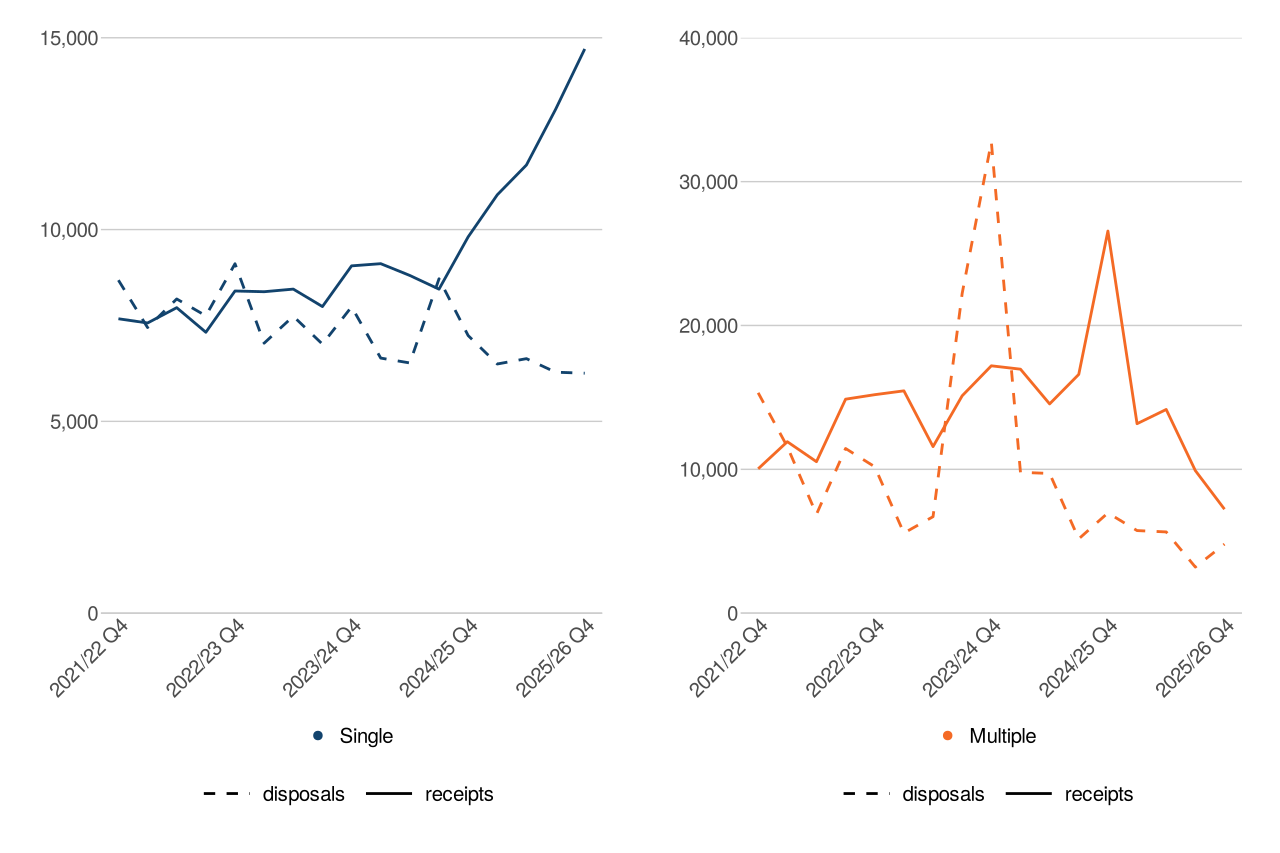
- Note that the axes for single and multiple claims use different scales
Figure 6.2: Employment Tribunals single and multiple claims open caseload, Q4 2021/22 to Q4 2025/26
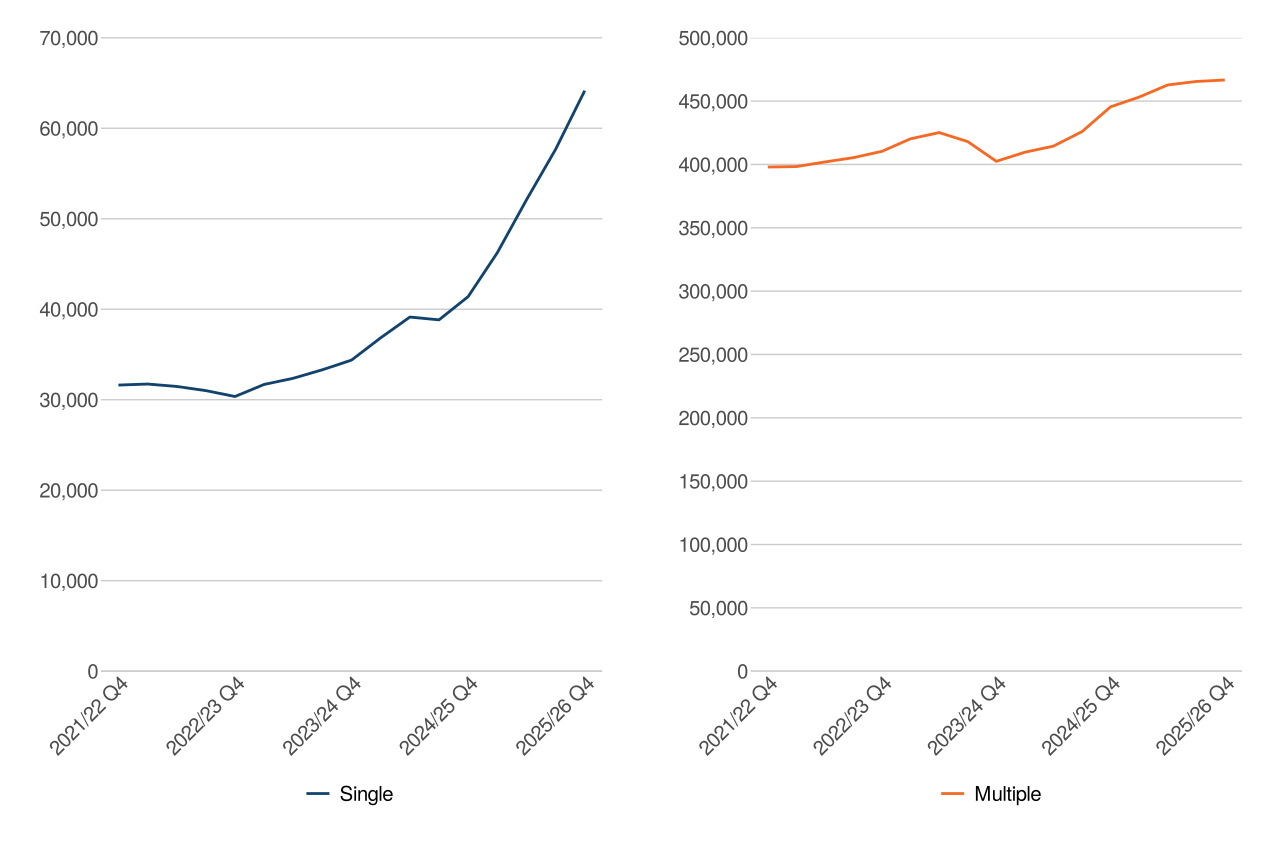
- Note that the axes for single and multiple claims use different scales
Single claim open caseload (at 64,000) increased by 55% compared to the same period in 2024/25.
There were 7,200 multiple claims received this quarter. Multiple claims tend to be more volatile as they can be skewed by a high number of claims against a single employer.
The peaks seen in the number of disposals in Q3 2021/22, Q3 2023/24 and Q4 2023/24 are due to large spikes in multiple claims:
- A dismissal judgment was issued in December 2021 for 48,000 British Airways claims covering 71,000 jurisdictions. These claims had been withdrawn over a number of years but given the volume and restrictions with the old case management system these had not been formally closed until now, hence the spike.
- Between November 2023 and March 2024, a bulk case of multiple claims for equal pay against Glasgow City Council have been settled and subsequently withdrawn, resulting in the spike in disposals in Q3 and Q4 2023/24.
The 12,000 single claim receipts and 5,500 single claim disposals on the Reform system covered 26,000 jurisdictional complaints receipts and 11,000 jurisdictional complaints disposals in Q4 2025/26, while the 37,000 open caseload covered 87,000 jurisdictional complaints at the end of this period. The cases have been undergoing a gradual roll-out, which makes value comparisons to the same period last year meaningless until case numbers stabilise. As such, we will provide proportional comparisons only.
Three jurisdictions make up around 52% of total jurisdictional complaints receipts in Q4 2025/26: Unfair dismissal, Disability discrimination and Unauthorised deductions (formerly Wages Act). These account for 23%, 16%, and 13% respectively of the total jurisdictional complaints receipts in Q4 2025/26, up 1, up 3, and up 1 percentage points respectively compared to the same period last year. This is also reflected in the open caseload, with the same jurisdictions making up around 49% of open cases in Q4 2025/26.
The jurisdictions with the largest number of disposals remain volatile, although this is expected to stabilise as reform is embedded across all areas. In Q4 2025/26, these were Unfair dismissal (25%, up 2 percentage points compared to the same period last year), Breach of Contract (11%, down 4 percentage points), Unauthorised deductions (13%, down 2 percentage points), and Disability discrimination (14%, up 3 percentage points).


Related news
Acas Code of Practice on Disciplinary and Grievance Procedures

New Employment Appeal Tribunal (EAT) Judge Appointed