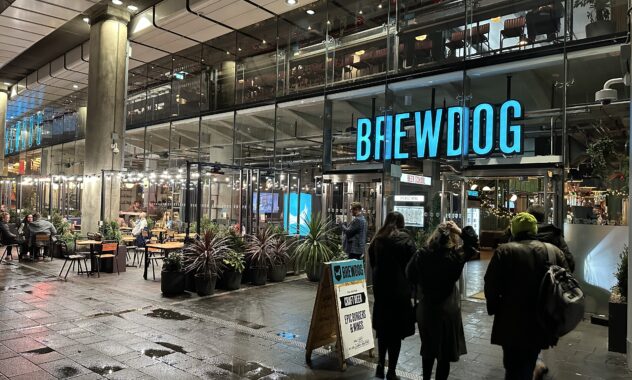
BrewDog employees concerned for their futures having learned company could be sold off, Unite has said
Financial experts AlixPartners have been brought in to attract new investors in a move which could see the Aberdeenshire-based firm broken up
Scottish craft beer company BrewDog has been put up for sale. The firm, which owns around 60 bars and breweries in the UK, has appointed financial experts as the company opens up to investors.
Unite the union said “upset” staff had only received a single email from senior management – with some only finding out about the potential sale after it was reported in the press.
In a separate email to staff, seen by BBC Scotland News, BrewDog said the decision was a “normal and prudent step”. The company said it “did not change day-to-day operations, our roles or our immediate plans”. In a public statement, the company said it had taken the decision to bring in AlixPartners after “operating in a challenging economic climate”.
BrewDog, which was founded in Aberdeenshire in 2007 by James Watt and Martin Dickie, confirmed the move to sell-up, saying it would now focus on the “long-term strength and sustainably” of the company, the Daily Record reports.
A statement from BrewDog said:
Following a year of decisive action in 2025, which saw a focus on costs and operating efficiencies, we have appointed AlixPartners to support a structured and competitive process to evaluate the next phase of investment for the business. This is a deliberate and disciplined step with a focus on strengthening the long-term future of the Brewdog brand and its operations.
BrewDog recorded losses of £59m in 2023 and £30.5m in 2022.
The firm has also come under fire in recent years for its marketing campaigns and claims about its workplace culture:
- In June 2021, a group of over 100 former BrewDog employees published an open letter criticising the firm’s business practices and the treatment of its employees. The letter cited a “culture of fear” and claimed the company was “built on a cult of personality”, with founder and CEO Watt singled out for particular criticism.
- In January 2022, an episode of BBC One investigative series Disclosure interviewed “former employees who say they found it a miserable and uncomfortable experience”. The Guardian later revealed that Watt had hired private investigators to obtain information on people he believed were propagating a smear campaign against him
- In January 2024, BrewDog announced that it would no longer pay the “real living wage” from April 2024.
- In March 2024, staff from BrewDog’s flagship Waterloo bar signed an open letter to the company stating their working conditions were unacceptable and that little had changed since BrewDog’s commitment to improve was made in 2021
Watt stood down as chief executive officer in 2024, moving to a new role of “captain and co-founder”. Dickie left the firm last year for personal reasons.
In January, the company said it would stop making its Lonewolf Gin and Abstrakt Vodka brands at its distillery in Ellon. That came a few months after job cuts were announced across the business after it posted a £37m loss.
Bryan Simpson, hospitality lead for Unite, said the union had been “inundated” with messages from staff worried about their livelihoods since the news emerged.
He said some workers had already had their hours cut from 32 to 24 per week, meaning they were about £400 worse off. The company currently employs around 1,400 people and has breweries in Ellon as well as in the US, Australia and Germany. Simpson said many of those contacting the union for advice were employed at the Ellon site.
He said:
Let’s be clear, this isn’t just the potential collapse of a brand, this is people’s jobs, this is people’s rent, how they pay their bills and their childcare and yet they are being informed about the sale of their employer through the press. That is morally unacceptable.
We need clarity on jobs. If there are going to be redundancies, they need to be informed as soon as possible, legally and morally, because they cannot have job losses with consultation and without ensuring they get the maximum they are due.


Related news
Unite fury at BrewDog’s treatment of staff as 38 bars close and 484 jobs are lost amidst company sale