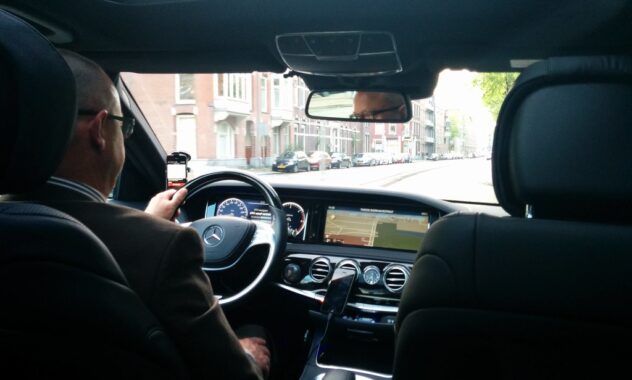
Transport for London urged to ensure London drivers are ‘not left behind’ by driverless cars.
GMB add their voice to a London Assembly report urging transport officials to hold off on introducing driverless taxis.
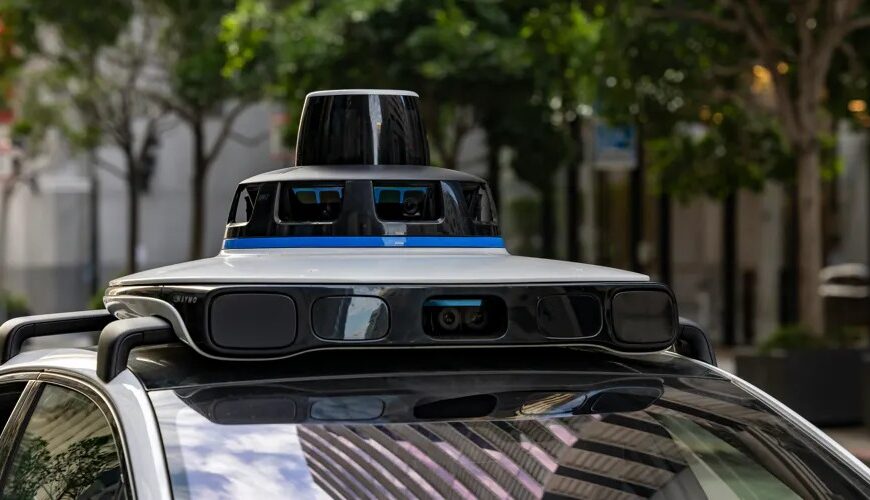
The GMB union has welcomed the London Assembly Transport Committee’s report on the future of autonomous transport in London, while demanding a ‘just transition’ for drivers.
In its report, the London Assembly Transport Committee said that, as it stands, it has not currently heard sufficient evidence to persuade it that London should welcome autonomous passenger services.
Recommendations in the report ‘Who’s driving the future of autonomous transport in London?’ include:
- The current Automated Passenger Service (APS) permitting framework should be regarded as transitional, during the initial small-scale pilot phase. When the Government puts in place the full regulations under the Automated Vehicles Act in 2027, it should devolve the power to issue and withdraw APS permits, and to set conditions for operators wishing to deploy autonomous passenger vehicles in London, to Transport for London (TfL).
- TfL, in partnership with the Metropolitan Police Service (MPS), the London Ambulance Service NHS Trust and the London Fire Brigade (LFB), should establish a standard framework for interaction between autonomous passenger vehicles and emergency services.
- TfL should establish a definition for safety incidents involving Autonomous Passenger Vehicles. This should include as a minimum, crashes and near misses. As a condition for granting consent, TfL should require that this information is provided along with the vehicle’s decision-making processes that led to the incident within 24 hours.
- TfL should establish ‘empty miles driven’ as a core reporting metric, as a condition for granting consent to Automated Passenger Service (APS) permits. TfL should continuously monitor and publish this data, alongside data on traffic levels and congestion. Negative impacts on congestion should be a reason for withdrawal of consent if TfL is granted full regulatory powers.
Matthew Wright, GMB Regional Organiser, said:
GMB is pleased to see the Transport Committee recognise the impact autonomous vehicles could have on drivers’ jobs and their recommendation for a just transition plan.
Support and protection for drivers, including retraining and redeployment opportunities, will be essential if autonomous vehicles become more widely available.
We also welcome the recommendations on passenger safety, and particularly the experience of disabled passengers, who often rely on our members for assistance and reassurance only a human driver can provide.
We have been calling on the Department for Transport and TfL to develop a plan for a just transition to driverless services, and we urge them to begin work on this prior to deployment.
We look forward to working with TfL and the Transport Committee on the report’s recommendations to ensure London’s drivers have a voice and are not left behind.
Elly Baker, Londonwide Assembly Member and Labour’s Transport Spokesperson on the London Assembly, said:
Automated Passenger Vehicles could have a significant impact on driving jobs here in London. We need to take that extremely seriously. Private hire drivers deliver an essential service to Londoners and we need to recognise that.
I’ve been clear that we need to fully understand how these vehicles could affect congestion and safety on our streets before we agree to allow them to operate. If we don’t, then everyone from professional drivers to any Londoner who uses public transport could be affected.
I want to see a more considered approach from all levels of government to protect livelihoods. We must not be afraid to say no to robocabs if we can’t make sure that the needs of all Londoners are met.
At Labour Party conference in September, the GMB called on the Government to back a “transition fund” paid for by a levy on tech operators. These funds would go into a pot specifically for drivers who have their earnings reduced or lose their job as the technology arrives. GMB have estimated that more than 300,000 jobs across the country could be at risk.
Speaking at the Labour Party alongside Justin Madders, the Minister in charge of driverless cars, Mark Betteridge from the GMB told attendees:
Our job is to improve pay, terms and conditions. When it comes to driverless taxis, we would look for some sort of transition plan, potentially even a transition fund to get people through.
Driverless taxis have the potential to add to what is provided — but there is the obvious threat of displacement; of people losing their jobs.
At the GMB conference in Blackpool in June delegates backed a call for the government to bring forward legislation to protect drivers. In a letter last month, GMB reps wrote:
With Autonomous Vehicle deployment potentially imminent neither Transport for London or the Department for Transport have done anything to ensure a ‘just transition’ that protects 300,000 drivers, their families and communities during the future introduction of AVs.
We have seen countless examples from across the world that without any plan and left alone, the ‘AV market’ will seek to avoid any responsibility for drivers and their livelihoods, and we cannot allow that to happen here.
AVs should not be introduced until a ‘just transition’ is agreed with driver members and all deployment and safety concerns have been addressed.


Related news
Third of delivery drivers paid less than the National Minimum Wage
ADCU calls for lifetime basic income for private hire drivers