One in seven UK workers have experienced a ‘clear violation’ of their basic employment rights
"Widespread and pervasive rights violations” have harmed workers throughout the UK across all employment sectors, UCL report says

At least 5.4 million people, or 14 per cent of workers, have experienced a clear breach of their basic employment rights in the past two years, a study published by the Fair Work Agency (FWA) has revealed.
The FWA was created in April this year to consolidate the enforcement of employment rights into a single regulator.
The study by a team of researchers for University College London (UCL) was commissioned by the former Office of the Director of Labour Market Enforcement and published by the Fair Work Agency.
Particularly precarious workers were the worst affected, with 25.6 per cent of ‘precarious workers’ experiencing a breach of their employment rights. Krisztián Pósch, lecturer in security and crime science at UCL and study co-lead, said:
Our study shows that huge numbers of people across the UK are having their employment rights violated, and even more are being harmed in other ways at their workplace.
These issues are complex, as are laws and regulations around worker protections, which pose challenges for attempts to make enforcement more effective.
Around 26.6 to 28.7 million people, or 70 per cent of workers, have experienced some form of harmful practice at work, either illegal or potentially illegal. This includes issues such as working unpaid overtime, physical injury, leave-related difficulties, negative mental health impacts of work and bullying and harassment.
Negative mental health was the most common harmful practice experienced by workers, with 37.5 per cent of the full workforce affected, and 22.1 per cent of precarious workers.
A further 6.1 per cent of all workers and 14.9 per cent of precarious workers were paid below National Minimum Wage, with regular workers typically losing £1,217 each annually and precarious workers losing £858.
On average, the 31.8 per cent of workers who worked unpaid overtime worked six unpaid hours for every 100 paid hours. Among precarious workers, eight unpaid hours were worked for every 100 paid hours.
The authors of the report said:
“Overall, our results point to pervasive non-compliance and other work-related harms across the UK labour market. In the 2 years prior to our survey, 14% of workers experienced at least one clear legal violation out of the 4 in question here. At a minimum then, around 5.4 to 5.8 million workers have had these relatively straightforward employment rights breached. This is of particular and immediate importance to the FWA’s work.
Even more concerningly, 7 in 10 workers experienced at least 1 of the 8 main issues in focus, which together cover a range of clear legal violations, potential legal violations and other harmful practices at work. That equates to an estimated 26.6 to 28.7 million workers in the UK affected …
… The sheer prevalence of violations and other issues experienced over a relatively short period of time challenges received wisdom that most businesses are compliant, and only a few ‘bad apples’ undermine labour standards. We cannot speak to businesses’ intent – some breaches may be deliberate, others negligent, and others genuinely accidental.
Regardless of intent, the identified scale of unlawful and potentially unlawful but certainly harmful behaviour suggests that in practice workers’ rights are likely breached at scale. Our in-depth interviews also revealed how workers navigate unlawful and poor treatment, including when few alternatives exist and trying to challenge it proves difficult, frustrating and ineffective.
At a minimum, 5.4 million workers had these basic employment rights breached.”
The report, Working Lives: the scale and nature of labour market non-compliance and other work-based harms in the UK, also made a series of recommendations, including:
- raising the visibility of the Fair Work Agency
- improved communications about workers’ rights
- easier and safer means for workers to report abuses, including additional safeguards for migrant workers
- providing multilingual communications and reporting
- proactive monitoring, inspections and enforcement using best-practice approaches, and
- improved evidence and research on the effectiveness of interventions
You can read the ‘Working Lives’ report here.


Related news
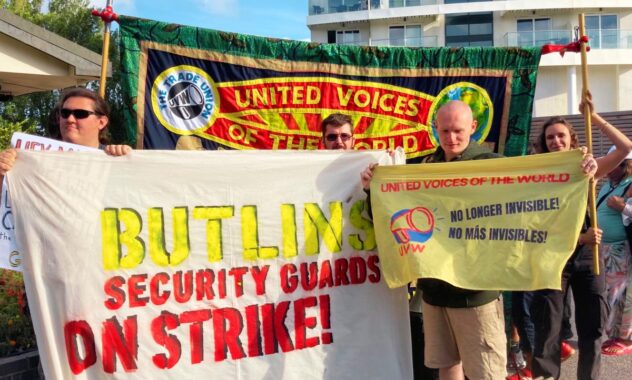
UVW seeks court injunction against Butlin’s over alleged union intimidation and blacklisting

Nearly 660 employers announced as failing to pay the minimum wage