Drivers call for Valentine’s Day consumer boycott of ride-hailing apps
As well as pay, the union wants protection against unfair dismissal and proper safety measures to reduce the risk and impact of passenger violence.
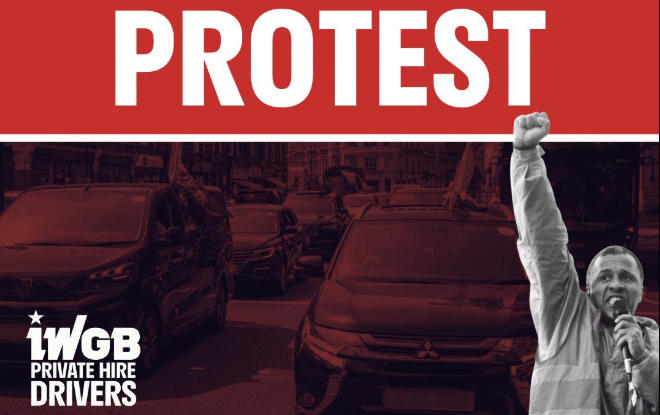
Drivers working on platforms like Uber and Bolt have called on passengers to boycott the apps this Valentine’s Day, as part of a campaign over pay, rights and safety measures.
Members of the Independent Workers’ Union of Great Britain (IWGB) are urging consumers not to use ride-hailing apps for 24 hours on Friday 14 February, arguing that the low pay and lack of protections are leaving drivers struggling to survive.
Uber calculates its drivers’ pay using dynamic pricing algorithms, under which fares fluctuate dramatically. The IWGB says that with no government scrutiny into how these models work, companies can continually reduce drivers’ pay without challenge.
Out of the pay they make from the apps drivers must cover costs including vehicle rental, insurance, fuel, licensing fees and congestion charges. The union says working 30 hours a week just to break even is common. An Oxford University study published last year found that Uber drivers’ pay has declined since the introduction of dynamic pricing.
As well as pay, the union wants protection against unfair dismissal and proper safety measures to reduce the risk and impact of passenger violence. In 2021, Gabriel Bringye, a Bolt driver and member of the IWGB was killed at the wheel by passengers whilst on a job.
Cities and countries including New York, France, Mexico and Barcelona, have taken steps to protect private hire drivers from exploitation by introducing minimum pay rates or greater oversight of ride-hailing platforms. But Transport for London and the UK government have yet to introduce comparable protections for London’s more than 100,000 private hire drivers.
Alongside the consumer boycott on 14 February, the IWGB is calling for drivers to log off their apps and join a motorcade in central London from 5pm.
Nader Awaad, Chair of the IWGB Private Hire Drivers Branch and a driver for 7 years, said:
The UK’s private hire industry is a wild west. With no protection from unfair dismissal, drivers see their entire livelihoods go up in smoke, in the blink of an eye, for no reason. With no real safety measures we are left completely unprotected from passenger violence, frequently resulting in serious injuries, or, in the tragic case of our member Gabriel Bringye – death.
That’s before we even start talking about pay. My colleague drove a passenger from Heathrow Airport to central London the other day. The passenger was being charged £111. Uber paid the driver £29. That’s nearly 75% of the money, not for providing the car, not for covering the fuel, not for insurance, not for vehicle maintenance – just to be on the app. Uber’s cut does not justify what they provide.
Because of these commissions I have to work long hours to earn a living. After covering their car rental, insurance, fuel, maintenance, traffic fines, etc., I believe many drivers are taking home less than the minimum wage. The government says it’s improving employment rights. Why are they ignoring gig economy workers like me? We are facing some of the worst working conditions in the UK. Yet we have been completely abandoned. It’s time for drivers and riders to come together and use our collective power to demand change.
Alex Marshall, President of the IWGB Union, said:
Uber uses smoke and mirror pay algorithms and satisfaction surveys to make claims that drivers are well paid and happy. Next time you get in an Uber I invite you to speak with your driver and find out for yourself. Ask them how many hours a week they have to work. Or when the last time they took a holiday was. Or how often they get to spend time with their children.
People that came before us fought hard to win us weekends, holidays, the minimum wage, capped working hours, and sick pay – basic rights that everyone would agree changed life in our society for the better. But gig economy companies like Uber have found legislation loopholes to strip their workforce of those rights and bring back Dickensian levels of exploitation. Drivers on these apps are now forced to work 70 or even 80 hour weeks in some cases.
If drivers and riders unite in action, starting with a Valentine’s Day boycott of all ride-hailing apps, we can force TfL and the UK government to follow authorities in New York, France, Mexico and Barcelona, in regulating these platforms, so that drivers can get back the quality of life we all deserve.


Related news
Uber criticised for failure to fairly compensate drivers affected by technical issues
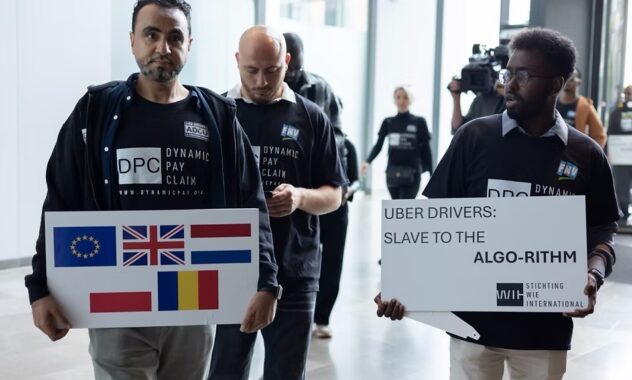
Uber drivers begin landmark legal action over dynamic pay and algorithmic management