Unions respond to Autumn Budget 2025
Mixed reaction to Rachel Reeves speech in the Commons
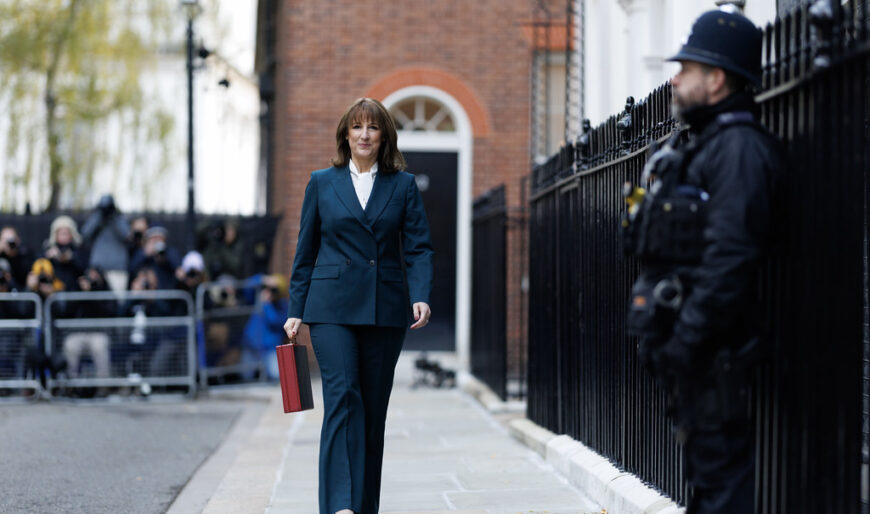
Unions have welcomed some of the measures announced by Chancellor Rachel Reeves in her Autumn Budget statement, while pushing the government to go further in addressing the cost of living crisis, chronic under-investment in industry, creaking public services, crumbling schools and flat-lining pay.
Reeves received praise for scrapping the controversial two-child benefit cap and for freezing energy bills and rail fares , but there was criticism for not going far enough on taxing the wealthy and the freeze on income tax thresholds.
The TUC welcomed the measures announced by the Chancellor, but warned that, to build on these policies, there will need to be a “relentless focus on affordability and making work pay beyond this Budget”. General Secretary Paul Nowak commmented:
The Chancellor has delivered urgent relief to millions of hard-pressed households up and down the country and helped to rebuild our public services.
Bringing down energy bills and taking action to make work pay will make a real difference to people struggling to get by. Scrapping the two-child benefit cap will lift hundreds of thousands of kids out of poverty. And new investment in young people, our public services and infrastructure is much needed.
The policy decisions announced today will disproportionately benefit those low and middle income households at the sharp end – and tax increases will fall on the wealthiest.
Fourteen years of Conservative government took a wrecking ball to living standards – with pay packets squeezed, child poverty at crisis levels and vital public services left on their knees after years of cuts.
This government is starting to turn the page on that failed Tory era.
But fixing the mess that the Tories left will take time. We now need to see a relentless focus on affordability and making work pay beyond this Budget.
That’s how you rebuild the country and show you’re on the side of working people.
Gary Smith, GMB General Secretary, said:
Today’s budget looks like the final nail in the coffin for the Conservative’s failed austerity project. Key public services, essential national infrastructure, and communities across the UK suffered deep wounds because the Tories made the wrong economic choices – we must never go back to those dark days.
The challenge for Labour is to grip the task of rebuilding our economy and country, lock in essential investment to create growth, and start bringing a bit of hope to people.
Unite General Secretary Sharon Graham was more critical of the package of measures, saying:
On the fundamental issues of who pays for the crisis and the investment required to back British industry, the wrong decisions are being made. Millions of workers are being forced to live hand to mouth, surviving rather than living.
Communities are being ground down by surging energy bills and baked in high food prices, while at the same time profits soar.
Energy companies have made over £30 billion in profits, costing households £500, while supermarkets led by Tesco – which made £3.1 billion – are coining it in.
The chancellor has picked a side. Health workers, engineers, and tanker drivers will pay through stealth taxes, while city bankers and billionaires go largely unscathed.
UNISON general secretary Christina McAnea urged the government to go “further and faster”, saying:
Scrapping the cruel two-child benefit cap is a victory for thousands of working families. Good riddance to it. But it should’ve happened sooner.
It shows Labour is at last heading in the right direction and helping those who most need support.
But the government must go further and faster if it wants to fix Britain.
The NHS, schools, councils, the police and other essential services require sustained investment if they are to deliver the changes voters want.
Labour was left a dire inheritance, but ministers need to be braver and shift the dial back towards working people.
The chancellor could and should have asked the wealthiest to pay even more. Putting money in the pockets of working people boosts local economies. Freezing tax thresholds does the opposite.
Usdaw welcomed the Budget speech. Joanne Thomas, Usdaw General Secretary said:
Today’s Budget shows that the Government is serious about tackling child poverty, particularly for those in working households. As one of the top seven wealthiest nations, it is unacceptable that millions of kids are growing up in poverty in the UK, with 7 in 10 of them in working households. That is a legacy of 14 years of Tory failure, which Labour is working to turn around. Ending the Tories’ unfair two-child cap will help hundreds of thousands of children out of poverty.
Further action is already under consideration and Usdaw is participating in the Government’s reviews of the universally discredited Universal Credit system along with parental leave and pay. All these initiatives should make a real difference to working families, as will another significant increase in minimum wage rates, the continuing rollout of new free breakfast clubs, new nurseries in primary schools and doubling free childcare to 30 hours a week. This Government is helping to give children the best start in life.
Public and Commercial Services Union (PCS), which represents around 50,000 workers in the Department for Work and Pensions, welcomed the Government’s decision to scrap the two-child limit. However, the union was clear that more must be done to tackle the cost-of-living crisis. Fran Heathcote, PCS General Secretary, said:
The two-child limit is an abomination that has driven up child poverty, destitution and homelessness.
We also welcome moves to cut energy bills and freeze rail fares, but our members will be hit by the extended freeze in the income tax threshold.
At a time when thousands of the Government’s own workforce are balloting for strike action over poverty pay, the Chancellor should think again on taking more from basic rate income taxpayers.
Teaching unions also welcomed the ending of the two-child benefit limit, but pointed out the damagining effect of continued under-funding of schools. Commenting on the Chancellor’s speech, Daniel Kebede, General Secretary of the National Education Union, said:
Education is running on empty. Members tell me daily the effect that years of real-term funding cuts is having on their working lives – and the education of the children they teach. Today’s Budget has done nothing to improve this.
Educators believed Labour would at least start to fix the problems schools and colleges are facing. Instead, we have a government continuing to underfund education.
Roofs continue to leak, children continue to learn in their coats because heating is too expensive, and teachers continue to dip into their pockets to buy basic learning resources for their students. Staff are trying their best to hold things together, but they are swimming against the tide.
Lack of funding is already choking the system. But the government’s recommendation on pay for the next three years – a below-inflation, unfunded rise on top of 15 years of pay cuts – will only worsen the crisis.
The Chancellor says there is no return to austerity, but pay cuts against inflation means this will feel very much like Austerity 2.0 to teachers and other educators. The OBR has adjusted its inflation and wage growth forecast up, meaning the government’s proposals to the School Teachers’ Review Body are even more out of step with what is needed.
It is welcome that the government has at last listened to the overwhelming calls for an end to the two-child benefit limit. Abolishing this cruel policy is a significant step which will support hundreds of thousands of children and families. There is work still to do if we are to alleviate and reduce the scourge of child poverty. Free school meals for all is surely the next step.
The National Education Union will not accept the continued underfunding of our schools. We will not accept another pay cut. Our national executive will meet this Saturday to decide next steps. We must convince this government to change course – even if that means balloting for strike action. We must – and we will – save our schools.
Matt Wrack, General Secretary of NASUWT – The Teachers’ Union, said:
The announcement of the scrapping of the two-child benefit cap is a positive step and will make a difference to the lives of many children living in poverty. NASUWT teachers see the devastating impacts of poverty in their classrooms every day and policy change that helps alleviate that will be welcomed. But if Ministers are serious about supporting families then they must also deliver on strong and well-funded public services, including education.
The Government talks about the vital role public services play in society but we want to see how that translates into reality for schools and their staff. Teachers need to be valued, fairly rewarded and better equipped to deliver the highest standards for children and young people.
The Chancellor needs to deliver a fully-funded pay award for teachers that reflects the importance of teachers in changing the lives of children, and show how Government will work with the profession to rebuild resilience in schools by delivering increases in funding to school budgets that have been stripped bare.
We want to see the Government’s professed commitment to strengthening public services translated into action that supports teachers’ pay, wellbeing and working conditions. A stable, well-supported teaching workforce is essential if the country is to achieve its ambitions for children and young people.
Paul Whiteman, General Secretary at school leaders’ union NAHT, said:
We welcome Labour fulfilling its long-term commitment to lifting the two-child benefit cap.
This should help build on other really positive initiatives like the expansion of free school meals and roll-out of breakfast clubs to reduce the number of children in poverty.
NAHT has long called for action to bear down on the causes and impact of poverty, which can harm not only children’s school attendance, but also their ability to focus and flourish in the classroom.
Funding to improve and upgrade playgrounds and for secondary school libraries, is of course welcome.
But this wasn’t a budget focused on public spending and school finances remain in a perilous state, with some school leaders facing really unpalatable choices around cuts to staff and resources.
If this government really wants to make its mark on education, it must use some of the income raised in today’s Budget to ensure all schools have the resources they need.
It must show real ambition by investing more in fixing the often decrepit school estate, ensuring all pupils with special educational needs (SEND) get the support they deserve, and addressing the acute recruitment and retention crisis.
While welcoming the scrapping of the two-child benefit cap and a continued commitment to the Employment Rights Bill, Equity General Secretary Paul Fleming called it a “damp squib” for the arts, saying:
The Chancellor had the opportunity to deliver structural change through this budget for the performing arts and entertainment industries’ workforce. For all the speculation, it’s a damp squib.
The Government has opted to maintain tax reliefs, rather than set out a long-term plan for public funding of the arts which would address the root cause of creeping precarity in a critical sector for the UK economy.
Tax breaks are no substitute for a cohesive plan for public arts funding, which requires reform and meaningful increases to fulfil the Government’s own ambition for the sector. Funding must treat the sector as an ecosystem linking local theatre, film and TV production, and giving long-term stability to key national institutions. As a union we’re looking now with even greater expectation to the review of the Arts Council England, and the BBC Charter renewal, to deliver a coherent industrial strategy for our sectors.
Elsewhere, the commitment to deliver the Employment Rights Bill in full is positive, and needs to be backed with action to force Tory and Liberal Democrat peers to pass this flagship manifesto commitment. Whilst increases in the ‘living’ and minimum wage are positive, they cannot be a substitute for stronger trades unions, and empowered working people.
And while the scrapping of the two-child benefit cap is welcome, the social security system needs further reform. The irrational and punitive continuation of the ‘Minimum Income Floor’ mechanism to calculate Universal Credit payments for freelancers continues to push the less privileged out of creative careers, and speaks to a lack of ambition to deliver a compassionate social security system fit for the 21st century.
We’ve recognised a shift in constructive engagement with the union over the course of 2025, but with another key moment failing to advance the cause of good work for all artists, or good art for all workers, there is more pressure than ever on this Labour government to deliver equity to all people.


Related news
Unions respond to Burnham’s first conference speech as Labour leader & PM
School teachers’ pay: Joint union response to Secretary of State