

Shareholders’ rights v workers’ rights Hard Copy Trade Union
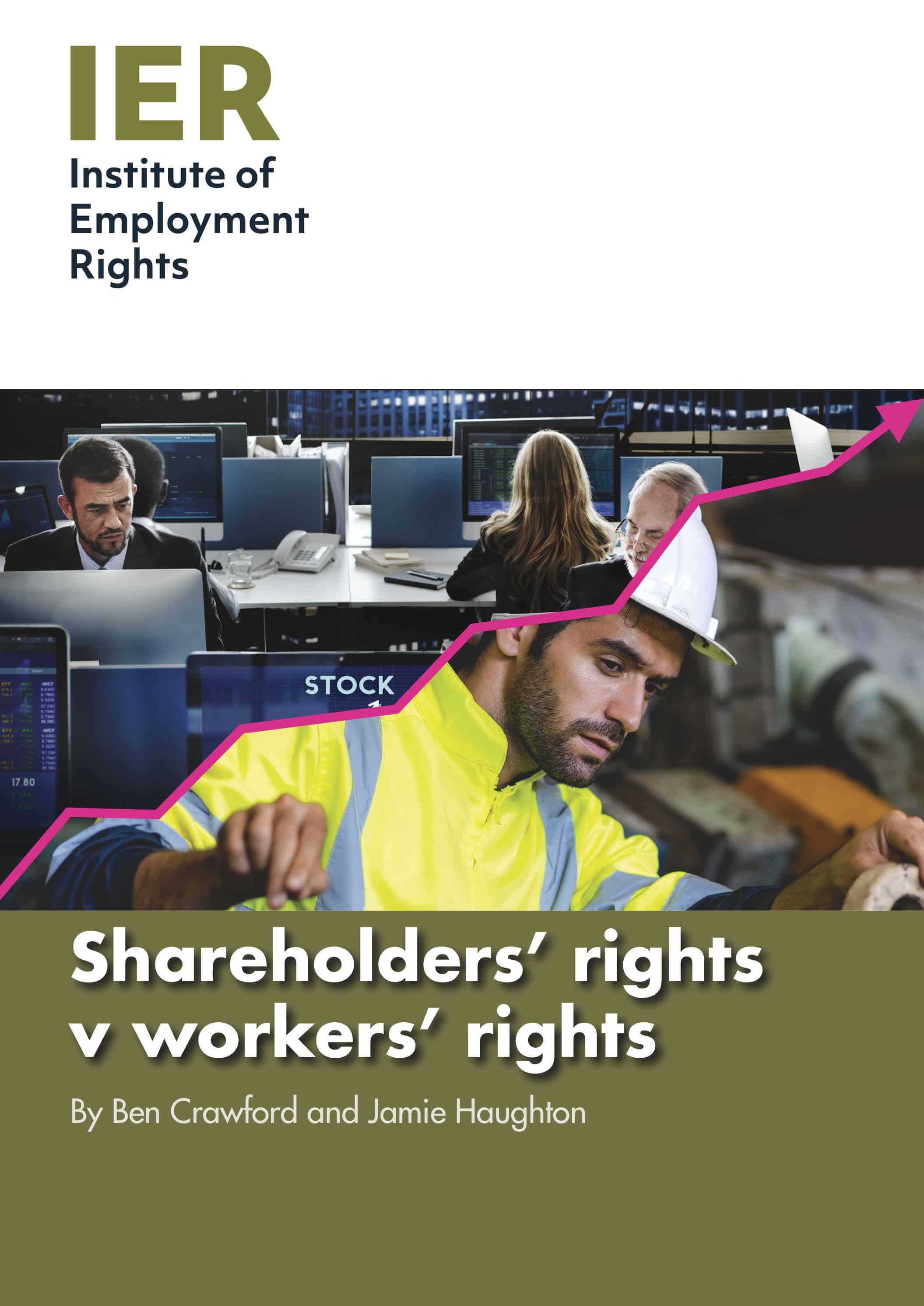
The authors make the case for why labour law should be viewed in a wider legal environment that incorporates corporate law reform
£12.00
About the book
The Employment Rights Bill 2024 sets out a series of necessary and overdue reforms to labour rights in the UK. However, these reforms represent a set of narrow interventions into a wider legal landscape that is heavily tilted in favour of the rights of shareholders over those of workers. This structural imbalance between workers and corporate shareholders manifests itself as a systematic undercutting of the effectiveness of workers’ rights against their employers.
In the context of global economic insecurity, climate change and industrial restructuring, the need to enhance the economic security and resilience of employees, firms, and communities has never been greater. Yet the current corporate law framework undermines this, enabling shareholder value extraction, creating conditions of endemic precarity for workers, and eroding worker voice. Thus, while the Employment Rights Bill represents an important step forward for workers, deeper change is necessary if the rights it provides are to be made truly effective against employers.
This pamphlet illustrates this structural imbalance between workers’ and shareholders’ rights and demonstrates the legal mechanisms by which shareholding serves to both subordinate workers’ interests and expose them to conditions of endemic precarity. In doing so, it shows the significance of the absence of these structural concerns in the Employment Rights Bill, and demonstrates why the trade-union movement can no longer afford to ignore corporate law as a site for labour activism.
Preview
Click the image below to download a limited preview of the book.
Get your copy now (free to IER subscribers)
This publication is available in hard copy and as an electronic download. There are substantial discounts available for trade union members – please select the appropriate option from the drop down list below.
Subscribers
Those with a paid subscription to the IER can:
- Access their free copy of the publication immediately by logging in to their account You must be logged in to view this content.
- Save their free copy to their personal library by logging in to their account and selecting either of the ‘download’ options below. Please add the download to your basket and proceed to the checkout to save the product to your library – you will not be charged.
Order copies online

Employment Law Update Liverpool 03/11/2026
Purchase your tickets for the Liverpool Employment Law Update on the 3 November
Labour Law Highlights 2025/6
The IER’s regular team of barristers guides readers through key court decisions in the last year that may prove

Shareholders’ rights v workers’ rights
The authors make the case for why labour law should be viewed in a wider legal environment that incorporates corporate law

Algorithmic Management and a New Generation of Rights at Work
The authors make the case for why regulation of management by AI should be regulated, in order to protect workers'






