Dr Antonio Garcia-Munoz

Antonio Garcia-Munoz is a Lecturer in Labour Law at the University of Glasgow

What made food delivery platform Uber Eats Spain change their business model and take on full responsibilities as employers under Spanish labour law?
 29 Apr 2026|
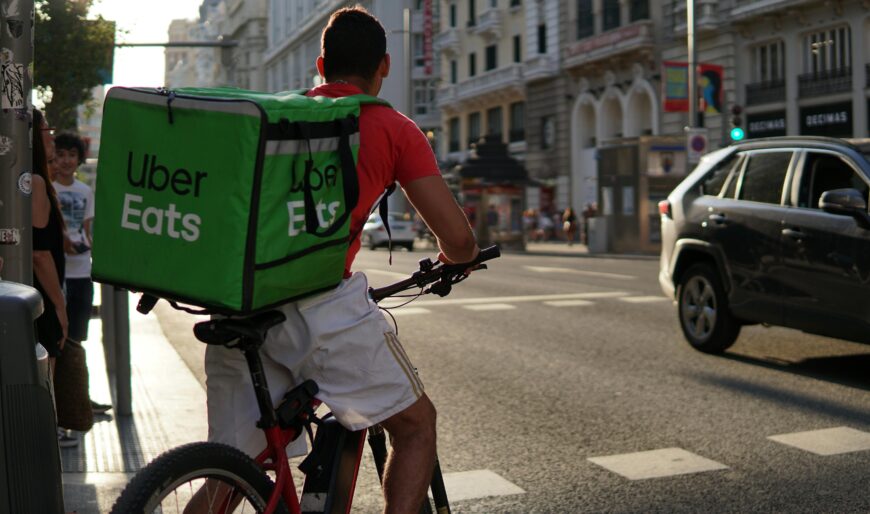
On 15th January 2026, the food delivery platform Uber Eats Spain announced the abandonment of its ‘hybrid’ model of engaging employees and self-employed riders in favour of a model of employees only. This came one year after its main competitor, Glovo Spain, also decided to operate exclusively with employees, a decision that became effective in July 2025. As a result, at the time of writing, all food delivery platform companies in Spain operate, or will shortly do so, using exclusively employee riders under contracts of employment, to whom therefore labour law is fully applicable. This represents a radical shift in the business model of companies operating in the sector, which, since their arrival in Spain more than a decade ago, operated through riders that were systematically classified as self-employed, referred to as ‘collaborators’ in the companies’ jargon.
What made these companies change their business model and take on full responsibilities as employers under Spanish labour law? Certainly, the change did not happen on the companies’ own initiative. Rather, it is the result of a complex, decade-long legal struggle.
What makes the story particularly interesting is that some of the companies involved decided to openly challenge the existing law in Spain for years. These companies chose not just to ignore several judgments and decisions by the Labour Inspectorate, but also to disregard the so-called ‘riders’ law’, a legal measure adopted in 2021 that established a reinforced presumption of employment status for riders. In a nutshell, companies consciously and strategically decided not to comply with the law and insisted on keeping their business model based on self-employed ‘collaborators’. The struggle, I argue, was no longer only about the correct classification of delivery riders, but also about the role of law and the state to make sure that its own rules are respected. It illustrates classical debates around labour law enforcement that are common in all jurisdictions, such as enforcement through the courts and imposition of monetary fines. It also invites us to think about the role of criminal law in labour law enforcement, and the importance of state-led action to force companies into compliance.
As elsewhere, food delivery platforms appeared in Spain about a decade ago. They offer a delivery service using a technological tool, the app, through which customers can order food to be delivered to their home or other location. The food is prepared by independent restaurants and similar establishments and delivered by the so-called riders, typically using a bike, electric bike, motorcycle or similar. Food delivery platforms characterise themselves as technological companies providing a service of mediation between customers, restaurants and riders. They classify riders as self-employed, instead of employees. The business model thus relies on supposedly independent, self-employed riders and avoidance of labour law. However, this model was challenged in Spain by different actors: the Labour Inspectorate, the judiciary and, finally, the legislature, with the Government, and especially the Ministry of Labour, playing an important proactive role.
The following paragraphs tell the story of the legal struggle that developed since late 2017 until January this year, when Uber Eats finally accepted that riders are to be employees in Spain. First, I will explain the events between 2017 and 2021, when the legislator decided to intervene adopting the riders’ law. Second, I will explain how this was not enough so that a second intervention, this time using criminal law, became necessary to ensure labour law enforcement. In the final section I conclude providing some general reflections on labour law enforcement.
1. Early stages
Between 2017 and 2021, the business model of the food delivery platforms was challenged by the Labour Inspectorate, the judiciary and the legislator with the adoption of the so-called riders’ law. Throughout this period, trade unions and other organisations founded by riders themselves played an important role in challenging how platform companies classified them so that they could claim labour law rights. They filed complaints that resulted in action by the Labour Inspectorate and brought proceedings that made judicial intervention possible. Furthermore, they also campaigned for the adoption of a law affirming the employment status of riders.
First was the Labour Inspectorate. In December 2017, the Spanish Labour Inspectorate in the region of Valencia declared (in a detailed and highly rigorous report) that riders working for Deliveroo in the city of Valencia were employees. The Labour Inspectorate’s report found that the material reality of the work relationship did not reflect the contractual definition of these persons as self-employed. This was grounded in the following key facts: the riders received detailed instructions on how to behave in different situations, the company had total control over the price of the service and the remuneration of riders (and both could be unilaterally modified by the company); the service was associated with the company’s brand and the riders were not acting independently in the market; finally, there was a rating system in place that was used by the company for different purposes, including the allocation of working hours, workload, sanctions, etc. Interestingly, the Labour Inspectorate considered that Deliveroo was not a technological company, but a food delivery company, since this was its social aim. Subsequently, the Labour Inspectorate issued an order that obliged the company to pay social security contributions (as all employers are obliged to do for their employees) for all its riders operating in Valencia – amounting to approximately 160,000 euros. The Labour Inspectorate further developed this line of action. Already in July 2018, it declared that more than 300 riders working for Glovo in Zaragoza were employees (and so the company was ordered to pay around 380.000 euros to the social security) while in Barcelona Deliveroo was ordered to pay 1.3 million euros in social security contributions for its riders there. In January 2023, Glovo accumulated economic sanctions amounting to more than 200 million euros affecting 37.348 riders.
The second challenge came from the judiciary, although here it was not so straightforward as in the case of the Labour Inspector. Initially, first instance and appeal courts could not agree on the employment status of riders; although most decisions found them to be employees, some did not. Against such background, the way was paved for the intervention of the Supreme Court to settle the matter. The Supreme Court, in its landmark case of 25 September 2020, concluded that a person working as a rider for Glovo was an employee. Among the central arguments of the Supreme Court was that the company was not a ‘mere’ intermediary, since it owned the essential tool for the organisation of the economic activity (the ‘app’) whereas the riders did not have an autonomous business organisation of their own. This is in line with EU case law and similar to the position of the UKSC on Uber BV and others v Aslam and others.
Third came the legislator’s intervention, with the adoption in 2021 of Law 12/2021, or the riders’ law. This modified the Worker’ Statute by adding a presumption of employment status applying to all persons working as delivery riders for platforms. This law has its origins in a social dialogue agreement– which was difficult to reach because the employers were divided and the lobby by the platform economy companies against it was intense- which highlights the importance of the work behind scenes of trade unions to secure the application of labour law to these new forms of work. The law was needed because some companies in the sector argued that the ruling of the Supreme Court did not establish a general doctrine and kept pushing for a model based on self-employment, crafting the service contracts they offered to the riders with the aim of circumventing labour law and even trying to organise riders to opt for a model of ‘freedom of choice’ to remain self-employed. So, the law had the intention or reinforcing the findings of the Supreme Court by sending a clear message: the riders working for platform companies are, under the Spanish legal order, employees (unless otherwise proved).
In principle, this should have been the end of the story, since the legal rules were now clear. However, the platforms reacted in different ways. If we focus on the big four, two of them, namely Uber Eats and Glovo decided to resist the application of the law – simply to breach the law, in other words – and to continue with their business model. Just Eat decided to comply and offered employment contracts to its riders, while Deliveroo decided to abandon the Spanish market.
2. The need to reform the Criminal Code to make companies comply
This is the background that explains why the legislator decided to modify Article 311 of the Criminal Code in late 2022. The reform introduced a new criminal offence: the imposition of illegal conditions of work to employees through contracting practices other than the contract of employment or their maintenance against (judicial) or administrative orders (my own translation). The penalty established is six months to six years’ imprisonment and a fine. In the explanatory part of the reform, the legislator explicitly states: ‘The framework (…) governing employment relationships is rooted in labour law, which ensures the effectiveness of its provisions through administrative and judicial institutions that uphold the validity of the regulations and judicial decisions. However, when the preventive and punitive measures available under labour law prove inadequate in the face of new forms of serious crime, recourse to criminal law becomes inevitable as a last resort’ (my own translation).
And this last resort was activated by the public prosecutor (Ministerio Fiscal) in April 2024 when it initiated an investigation against Glovo based in a report from the Ministry of Labour that found out that many riders where still treated as ‘self-employed’ by the company despite the 2020 Supreme Court judgment and the 2021 riders’ law. Subsequently, in June 2024, the public Prosecutor in Barcelona brought a claim against Glovo in the criminal jurisdiction. Criminal proceedings against Glovo were initiated and in December 2024 the CEO was called to appear in court, and then, just one day before he had to go to Court, the company made public that it would abandon its business model and offer contracts of employment to its riders. At the time of writing this criminal process is still ongoing. However, it already had an important impact, not only because strategically Glovo announced a change in its behaviour that implies the transformation of its business model to comply with the law, but also because it has ‘inspired’ the same transformation in Uber Eats Spain, that was also under investigation and had been subject to sanctions by the Labour Inspectorate. Arguably, it has also served as an inspiration for the Italian public prosecutor in Milan, that also has opened proceedings against Glovo in Italy.
Some concluding thoughts
As labour law scholars, trade unions and workers know well, labour law enforcement is often difficult and ineffective. The story I describe here illustrates how economic sanctions may not function as an effective deterrent when employers are big companies with the financial capacity to bear the costs. In the case of Glovo the company was able to pursue its objectives of operating with self-employed riders and, arguably, of eroding the Spanish legal framework despite the imposition of economic sanctions. A large company like Glovo could simply buy itself out of complying with labour law. Furthermore, the lengthy and difficult legal proceedings to make the company pay (it took more than 8 years to confirm the payment of the initial sanctions) put at risk the effectiveness of labour law enforcement. The company makes a rational calculus and decides that all things considered, it was cost-effective not to comply with the law. The result was that for a long time the companies were successful in operating under a business model that was at odds with the legal order, despite the sanctions.
Against this background, the intervention of criminal law becomes necessary. What is punished is – as Article 311 of the Criminal Court clearly states – the stubborn refusal to comply with the legal order. It is this action of insubordination that causes an intense social harm that the criminal law seeks to penalise. Stakes were high, as the Ministry of Labour has repeatedly expressed, the question was whether companies in Spain comply with the law or not. The effectiveness of the criminal law, as the last resort to ensure labour law enforcement, seems beyond doubt. It certainly reinforces the credibility and seriousness of the whole system, since companies will think twice before choosing non-compliance.
Labour law enforcement must be thought as an interrelated and complex system with interventions at many levels –administrative, judicial, collective and criminal- that mutually reinforce each other to achieve the final aim: that the law is effectively applied. Criminal law is just part of labour law enforcement and probably needed to avoid a hollowing out of the system, even if it intervenes only in the most serious cases as the last resort. This is not necessarily the end of the gig economy but certainly seems to be the end of a business model that circumvented labour law.
Antonio Garcia-Munoz is a Lecturer in Labour Law at the University of Glasgow