Janet Newsham

Janet Newsham Janet Newsham Janet works for Greater Manchester Hazards Centre as the coordinator and Chair of the Hazards Campaign.

Artificial Intelligence is and will continue to have a massive health and safety impact on workers.
 4 Jul 2025|
The Hazards Campaign welcomes the new IER book ‘Algorithmic Management and a New Generation of Rights at Work’ by Dr Joe Atkinson and Prof Phillipa Collins. It is an important contribution in developing our understanding of the issues involved and how to tackle them for the benefit of workers and society.
Although for many of us AI (artificial intelligence) may seem like a new phenomenon, it has been around for years, creeping into our everyday lives: our phones, computers, shopping, banking, holidaying, health care, transport, and in our workplaces in the key strokes we make, rate of manufacturing, learning, and all aspects of our workplace and work activities.
Over recent years and especially since the pandemic hit the world, we have moved rapidly online in all aspects of our lives. In work it has resulted in job cuts, higher workloads, micromanagement of products and processes and more inflexible employer/employee practices.
So maybe the question is does AI need workers?
This year’s Workers Memorial Day theme decided by the ETUC was AI and digital platforms and their impact on our fundamental right to safe and healthy work. The ETUC general secretary Esther Lynch said ‘The world of work is changing – rapidly, profoundly, and permanently. Digitalisation, AI Robotics, platform work, the green transition are reshaping how we labour and live. But while these transformations offer new opportunities, they also bring new dangers. Chief among them are the increasing psychosocial risks faced by workers: stress, burnout, anxiety, harassment, isolation, and emotional exhaustion. These are not fringe issues. They are systemic and they are escalating.’
In the latest Hazards Magazine, Rory O’Neill said ‘There used to be a boss, a manager, a supervisor, a line of command and a union to keep conditions in check. But for many workers automation and digitalisation mean working conditions are dictated by a machine or an app.’
Existing rights of health and safety reps should mean traditional trade union organised workplaces are able to ensure that AI and digital technologies do not harm workers. But are we asking the right questions, are we involved in the discussions about where and how it is being introduced and used and who is challenging unfair and unsafe practices not only in trade union organised workplaces but in unorganised, casual working environment?
On the face of it workers could benefit from sharing good practice, safer working procedures, sharing occupational health concerns, ensuring proper steps and procedures are followed, recording and monitoring of processes and products, as an aid to improving education, health care, occupational health and safety and many other places that could value the benefits, but (and it is a big but), the removal of individually directed care, education, working practices etc will only lead to a lack of creativity, versatility, personality, critical thinking and individual needs and adjustments.
Human beings are not machines and as the HSE (Health and Safety Executive) emphasises, work should be adapted to the individual to prevent hazards and promote well-being at work, recognising that there are individual differences in our personal abilities, mental capacities, and individual needs. This includes differences of age, sex, disability, health conditions and work experience.
Employers also have a legal duty to ensure the physical and mental health of workers and others impacted by the work activity or working environment.
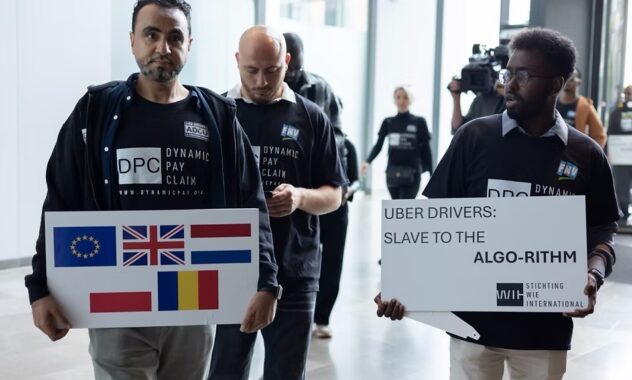
In recent years we have seen the detrimental impact of algorithms being used to set back breaking work rates and under-performers disciplined and dismissed. This dehumanisation of the workplace is described by Rory O’Neill ‘today you can be recruited by machine. Supervised and disciplined by machine. And ultimately fired or replaced by a machine.’
Employers must consult employees on matters that affect their health and safety. There are two sets of regulations that deal with consultation depending on whether there are recognised safety reps or not. Where there are safety reps, before change that will impact on health and safety, and even in workplaces with no trade unions the employer has a legal duty to consult workers on anything that impacts on their health and safety. Workers need to ensure this is taking place. New technology, processes, and intelligence collections need to be consulted on and anything that will detrimentally impact on workers’ health and safety challenged.
Impacts on workloads, pace of work or new working practices because of AI could cause work related stress and the employer is obliged under their legal duties to identify potential hazards, assess who might be harmed and how and put in place control measures which should be reviewed periodically and if anything else changes of is shown to cause harm. This would mean that employers cannot simply introduce new working practices without an ongoing review to ensure no one is harmed.
Reps should be able to monitor sickness and absence records to see if there has been any increased or changes in the issues impacting on workers’ health and deal with individual cases using investigations and collectivise issues through their right to inspection and talk to all workers.
Whilst the HSE continues to be underfunded and under resourced, there is still an opportunity for safety reps to raise concerns where workers are being harmed or may be harmed. Reps have of course got to go through the internal procedure first but the need to escalate to the HSE or other enforcement bodies. It can be used as potential leverage to encourage employers to act.
Another threat to people’s health comes from the micromanagement using surveillance in its broadest terms. On one hand, it could be spyware on the work that you are carrying out, counts and measurements on the number of documents, clients, items manufactured, keystrokes etc, video and voice recording from cameras, bodycams, and tracking devices. This unregulated intrusive control of workers is contrary to the management standards which are supposed to represent what decent work looks like and again must be challenged if people’s health and safety are being harmed.
A recent report by the ITUC ‘Artificial intelligence and digitalisation: A matter of life and death for workers’ the health and safety of workers is suffering as new technologies and employment practices, such as platform work, fall outside of the scope of traditional safety regulation and rights systems.’ ‘New work-related conditions, including ‘technostress’ and ‘cybersickness’ are emerging. Safety is also suffering with ergonomic injuries and workplace fatalities linked to the high work rates and job and pay pressures that come with management by algorithm.’
We must not ignore this development – it is and will continue to have a massive health and safety impact on workers and we must use health and safety regulation to the full to ensure that employers are controlling the risks and involving safety representatives and controlling the risks of harm to workers health and safety.
Janet Newsham Janet Newsham Janet works for Greater Manchester Hazards Centre as the coordinator and Chair of the Hazards Campaign.